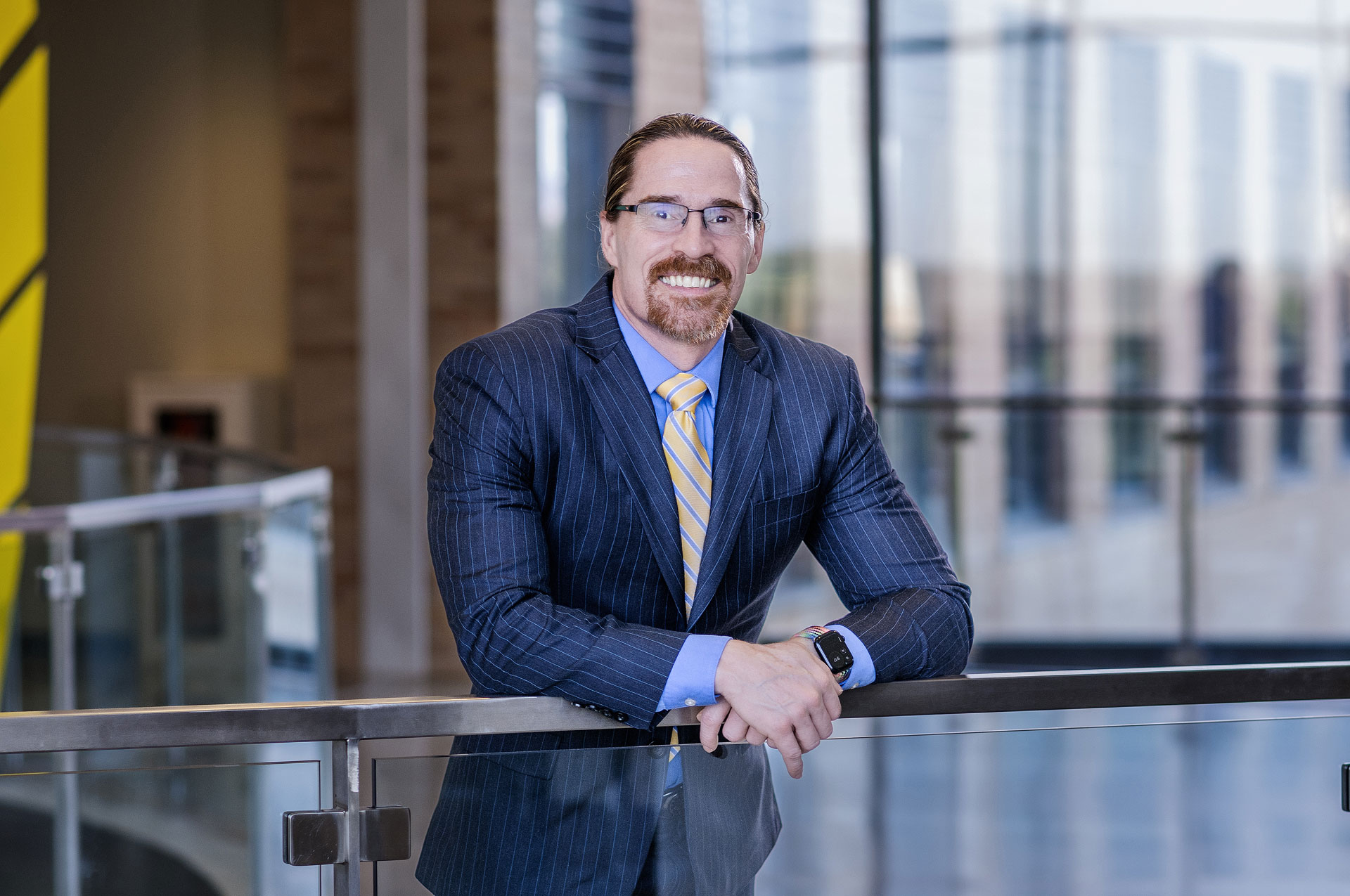
Salt Lake Community College President Greg Peterson recently sat down with The Globe to discuss ongoing changes involving artificial intelligence, apprenticeships, academic programs and the state’s DEI mandates, and how these shifts affect students on campus.
AI literacy and campus policy
Peterson said that when it comes to AI, SLCC is building infrastructure to support students. As part of that effort, the college launched an AI literacy course for employees last month.
“Our goal is to get at least 600 faculty and staff through it this year,” said Peterson, who took the pilot course over the summer.
“[The course] focuses not on a specific tool, but more on understanding what AI is good for — which is helping augment our human experience,” he said. “It should not replace critical thinking, human judgment or creativity.”
Peterson said the goal is to give faculty a common understanding they can bring into the classroom.
“It’s not so much [about] how you use this tool,” he said. “But how you think about the tool and where it’s appropriate and where it can help you.”
A collegewide AI policy is also in development.
“As we build out that policy, it’ll also help identify some of the constraints to help students understand where it makes sense to use AI and where it doesn’t make sense to use AI,” he said.
Peterson noted industry-specific examples of AI use already showing up at SLCC, including physical therapy and aviation maintenance.
“[Students] use an AI tool to take notes while they’re working with clients, and that’s done in the field,” he said. “Our aviation maintenance students have a tool that shows them the wear and tear on equipment … The output is effective so they can be better at fixing airplanes.”
Apprenticeships at SLCC
With a recent push for apprenticeships in Utah, such as Gov. Spencer Cox’s statewide Youth Apprenticeship Governance Council, SLCC has teamed up with employers like Swiss manufacturer Stradler Rail to pilot an apprenticeship program.
“We have over 50 students in manufacturing participating,” said Peterson. “We used that same model to create teacher education. So, we have a teacher education apprenticeship [with] 10 students that starts this fall and we’re looking at hospitality management and healthcare for next fall.”
SLCC takes part in Utah’s Talent Ready Apprenticeship Connection (TRAC). The three-year program starts when students are high school seniors and continues through college. Through partnerships, students can split their time earning a high school diploma, getting paid training while earning a degree in Applied Science in Advanced Manufacturing.
Updates to academic programs
With recent budget cuts, mainly due to HB 265, and the state mandate to streamline “high-demand” programs, SLCC responded by updating and modifying academic programs to “improve student outcomes.”
Peterson said the legislation requires colleges to ensure a “return on investment” for students and the community, a definition he said was “a little gray.”
“We don’t provide programs for people to get jobs,” said Peterson. “As a public institution of higher ed, we were built to support our democratic society … it’s really important that we help students become financially stable so they can engage.”
Lower-performing academic programs and areas such as the arts and humanities saw reductions while “high-demand” workforce and transfer programs such as business and health sciences saw the most reinvestment.
“There will be cases where there are programs that may not lead to the highest-paying jobs,” Peterson said. “We want students to know that. We want them to make educated decisions.”
Peterson said the goal is for students to be financially stable and that SLCC creates well-rounded programs that lead to good opportunities.
Regarding arts and humanities programs, Peterson says he is not concerned because these programs have a strong transfer pathway leading to bachelor’s degrees.
SLCC response to anti-DEI efforts
With cultural events like Juneteenth canceled, the Office of Diversity and Multicultural Affairs rebrand and LGBTQ+ spaces and symbols removed due to DEI restrictions, President Peterson shared how SLCC is working to ensure students feel valued and supported.
“We are, as a public institution, very much driven by what happens at the state level and what happens at the federal level,” he said. “What’s important for me, whatever’s happening around us, is to really be better at listening to students, to understand what they’re experiencing and what we need to connect.”
Peterson gave an example of speaking to students after the Gender and Sexuality Student Resource Center closed and making proposals on how to best utilize the space to support them. The former center is now the Bruin Paws Activity Lounge.
Peterson also expressed a focus on the “ideal student learning experience.”
“What would be the ideal experience for students?” he asked. “How do we provide that experience? How do we listen better to students? How do we make sure we’re connecting them — to individuals, to peers, to resources, to our faculty and staff — in ways that help them feel seen and heard …?”
Gail Miller True North Initiative
In August, SLCC opened the newly renovated Larry H. and Gail Miller Business Building at the Taylorsville Redwood Campus, with collaborative spaces, entrepreneurial work areas and hands-on learning labs. Peterson says the building gives students a place to “kick start” companies and small store fronts.
As part of the remodel, Peterson said the college is creating the Gail Miller True North Initiative, which he believes will become one of the best opportunities for students in the state.
“[It] really helps [students] think about leadership in the sense of service for community while also being successful financially and thriving in that economic space,” he said. “But [its] really about service as a value. How do you make communities better?”
Peterson said Gail Miller and her family have been “fully involved” in its development.
“Our goal is within five years to say, ‘If you’ve got the True North initiative on your resume, you can go anywhere.’”