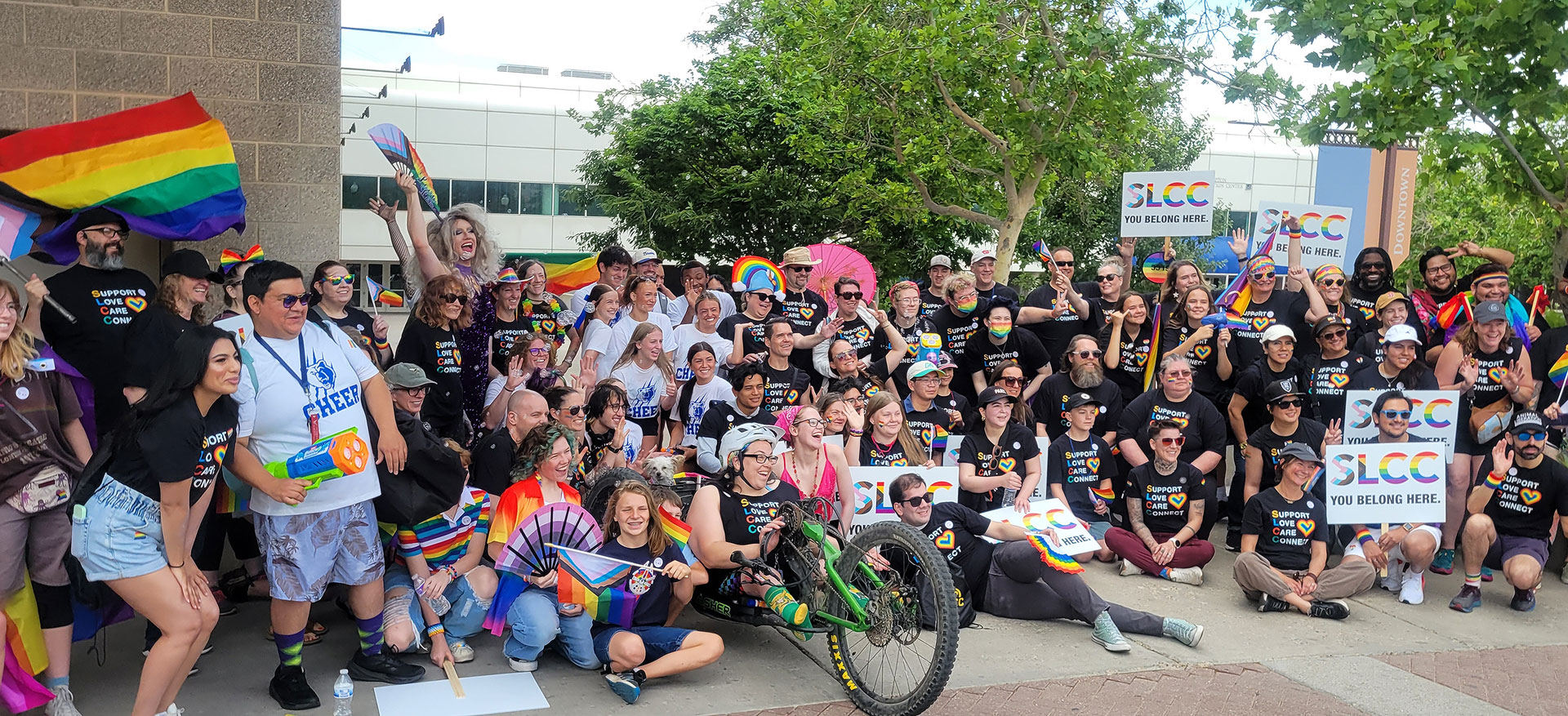
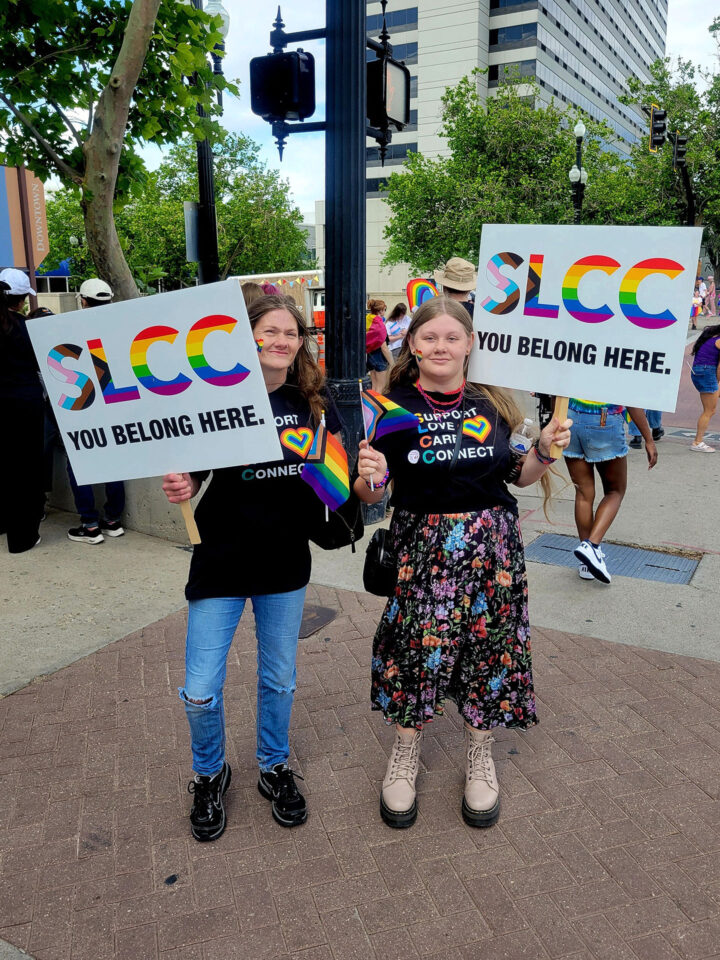
Salt Lake Community College marched in Utah’s annual Pride Parade on June 7, wearing shirts with messages of support, love, care and connection.
The parade, hosted by the Utah Pride Center, saw thousands of people march through the streets of downtown Salt Lake City in a celebration of the LGBTQIA+ community. More than 80 SLCC students, faculty, staff and supporters joined the parade.
Why SLCC marches
“We’re proud to support high-visibility, college-wide celebrations,” said SLCC Director of Community Relations Jen Seltzer Stitt. “We’ve done this for a long time. We’ve been in a number of parades around the valley, and it celebrates the core values of Salt Lake Community College.”
Those values include community and inclusivity, which seek to “cultivate an environment of respect and empathy.”
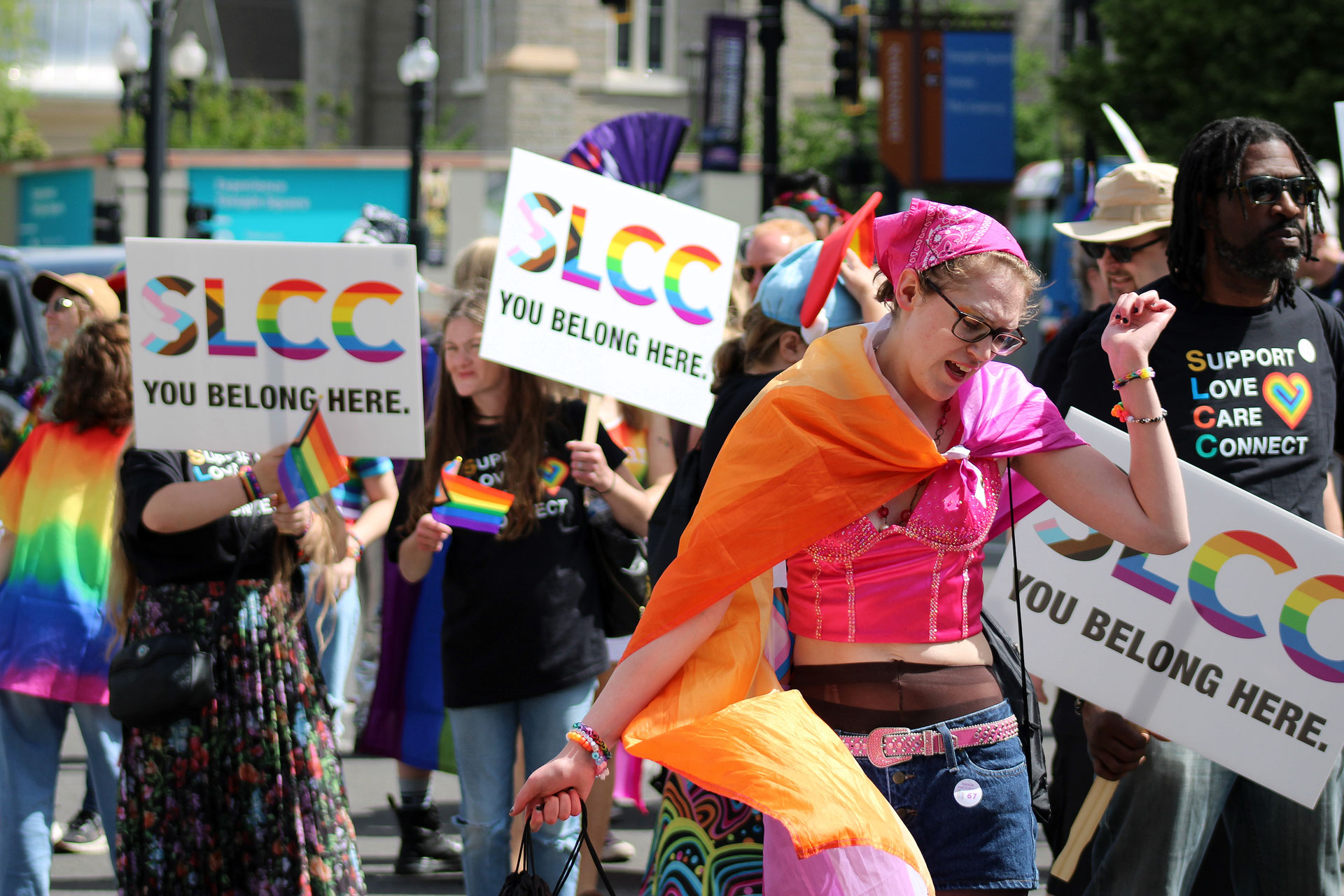
Like many, chemistry major Deborah Divine was attending her first Pride Parade. She explained the importance of showing up as a member of the LGBTQ community.
“For the longest time … I couldn’t accept the fact that I was LGBTQ,” said Divine. “It took me being around [LGBTQ] people to finally accept and start considering the fact that I was gay, and I hope to inspire some people. I want people to know that it’s okay to be LGBTQ.”
The SLCC cheer team, who performed routines in front of the energetic crowd, has attended the parade for the past four years.
“We come out as a cheer team to show our support for the community,” said cheer captain and marketing major Cole Saxey. “The reason I love coming is because the audience that we pass on the streets cheers us on more than any other parade. We do lots of different parades throughout the year, but [at] this one, we always get the most love from the LGBTQ community.”
Pride as a response to political and social challenges
The parade’s theme this year, “Pride Elevated,” which was inspired by Utah’s slogan “Life Elevated,” aimed to highlight the “resilience, visibility, and collective strength of LGBTQ+ Utahns who choose to live openly and authentically, even in the face of adversity.”
Utah has seen many laws impacting the LGBTQIA+ community, such as HB174, which banned gender-affirming care for minors, and HB77, which banned Pride flags from being displayed at schools and on government property.
For many LGBTQIA+ people, Pride provides a safe place to be themselves and sense of belonging.
“I identify as nonbinary, and I have a lot of family that is in the LGBTQ+ community,” said Amanda Rubino, an administrative assistant in the Office of Learning Advancement. “Living in a state that’s not always accepting of those different lifestyles and identities, and also having a Mormon background, I feel so at home and accepted here when I do this, and it just always makes me feel more me.”
SLCC has been affected by state laws this year, negatively impacting the LGBTQ+ community on campus. The most notable changes being the closure of the Gender and Sexuality Student Resource Center in February — which left the Queer Student Association without a meeting place — and the removal of the Pride crosswalks across campuses in April.
Because of the political climate, many said it is more important than ever for the SLCC community to show up and attend Pride.
“This is a growing community,” said Rubino. “As people learn more about themselves, and as more people feel comfortable coming out, [SLCC] being open is going to allow more people to come and feel safe.”
“Just being able to come out and be able to show visibility anywhere is bound to help at least some people who feel like they need to hide in order to survive,” said Jacob Linton, a theatre arts major.
What does pride mean to you?
Pride can mean different things for many people, and that interpretation varies based on who you ask. For Divine, Pride means honoring our past.
“A lot of people fought for our rights to be here today and to be open as we are,” said Devine. “So, to me, it’s a celebration of history, a celebration of love and it’s a celebration of who we are.”
“When I think of Pride, I think about loving the authenticity in yourself and showing that,” says Rubino. “Not in a proud way, but in a way that others feel safe around you.”
For Linton, who performs drag by the name Miss Angel Moroni, said drag has helped them be the truest version of themselves.
“To me, pride means … that people be who they want to be,” said Linton. “People feel comfortable expressing themselves, people feel comfortable showing their true selves. Being able to perform as a drag performer has been so alleviating to me.”
Beyond the LGBTQ identity, Saxey said Pride means something deeper.
“I think it’s not just about your sexuality or any of that stuff,” said Saxey. “I think just being proud of what makes you who you are, not being afraid to show who you are on the inside.”