Salt Lake Community College officially discontinued its esports program this summer. The decision came in August after months of uncertainty about continued funding.
A review conducted by SLCC in spring 2026 found that the program needed more than just a space to compete.
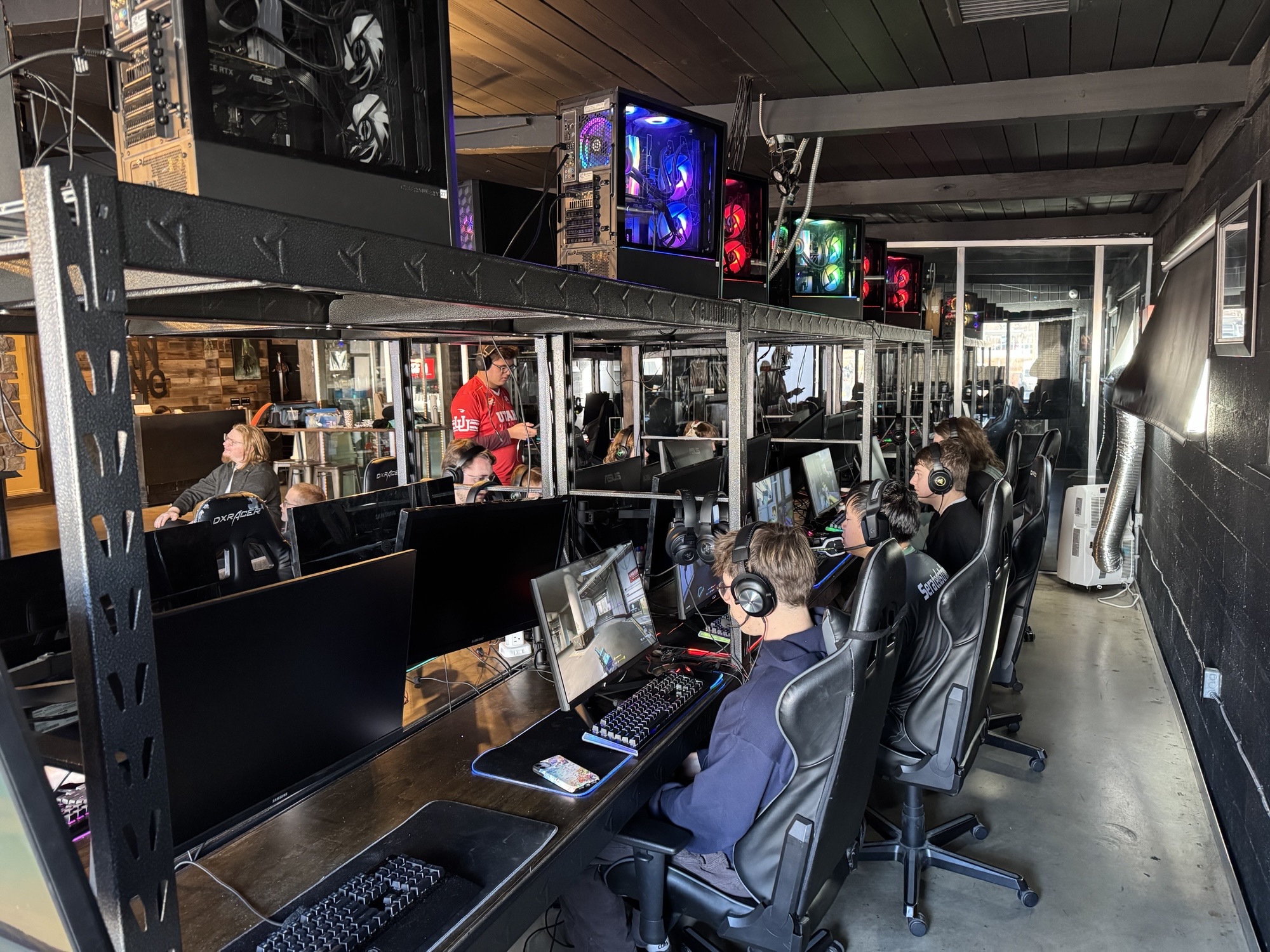
High upload speeds, a dedicated arena, and high-performance computer equipment are required to compete against other colleges and universities at the national level. Some institutions also have broadcasting equipment to stream competitions on different platforms.
Brenda Madore, vice president for Student Affairs, explained the reasons behind the decision to discontinue the program.
“We need infrastructure, a place, coaching staff, funding, resources,” Madore said, referring to the review.
Madore added that the program was competing against other colleges with dedicated spaces and resources. Additionally, SLCC’s program only had a part-time coach.
The esports team previously practiced in an unused architecture lab in the business building. However, the team lost access to the space when it was needed for academic purposes.
Students continued competing remotely from home using their own equipment. They mostly used Discord, where teammates met on Wednesday nights to communicate and play online.
Esports’ impact on students
According to the team, the administration told them it was working to find another space for the program, but those efforts never panned out.
Ashley Tracy, a 2025 SLCC graduate, joined the esports program in 2022 and participated in Halo and Overwatch competitions.
Tracy said Jeff Sosa, the former esports coach, helped turn esports into an organized competitive program, encouraging more students to get involved.
“The first season, we really got to actually compete; the SLCC Halo team was number one in the country in our league,” Tracy said. “I don’t think the program necessarily failed because of lack of success.”
In 2024, SLCC’s Overwatch 2 team traveled to Arlington, Texas, to compete in May Madness, a national tournament where the team finished 24th. The SLCC Hearthstone team also won the fall 2023 and spring 2024 national championships through the National Junior College Athletic Association Esports.
Tracy said the experience she gained from esports helped her find a job in the broadcasting industry. She also explained that the program encouraged students to develop a sense of responsibility toward their teammates and maintain good grades to remain part of the team.
Lena Hilarides, a SLCC graduate, discovered the esports program through a flyer on campus and joined the Overwatch team. She participated for four semesters, from fall 2023 to spring 2025. She said that despite the program’s discontinuation, the group still keeps in touch.
“Personally, I probably would have dropped out of the program that I was in if I hadn’t had the esports program,” Hilarides said.

Closure leaves void in gaming community
Madore said SLCC does not currently have the resources needed to support the program. Bringing esports back would require renovating a space to provide a competitive arena for students and hiring at least one full-time coach. She also pointed out that many other institutions have an entire coaching staff.
Cristian Ashdown, a current SLCC student, joined the Overwatch team during his first semester in fall 2024 and remained part of the esports program until its closure.
Ashdown said Overwatch attracted many students to tryouts, making it one of the most popular games offered by the program.
He also expressed concern about how the program’s closure affects incoming students who want to participate in extracurricular activities and meet others with similar interests.
“The people who were there talking to each other before it shattered are still together, but new incoming students who would be interested in finding other people who are interested in what they like playing or competing as well aren’t able to have that easy access anymore to find us,” Ashdown said.
The future of esports at SLCC
Even though the program was discontinued, the institution recognized the effort and determination of the esports team during its time at SLCC.
“The resources are not there to support them in a way they would need to be able to grow and be really competitive in the large environment out there,” Madore said.
Madore also highlighted Sosa’s experience and his contributions during the review, saying his knowledge helped the institution better understand the program’s needs. She recognized the hard work, dedication and competitive achievements of the students and coaching staff.
The esports team received the announcement about the program’s discontinuation through Discord. The institution also informed Sosa, who was in charge of coaching the team, about the decision.
A student-run club could be an alternative to the esports program. Madore said the college has provided assistance to students interested in transitioning to a student club with support from staff at the Thayne Center for Student Life, Leadership and Community Engagement.
SLCC esports previously operated as a student-run club before it was added to the Athletics Department in the beginning of 2020.
However, a student club would operate differently from an institutional esports program. It would depend more on student participation and would not necessarily have coaches or specialized staff. Clubs also receive limited funding based on their guidelines and funding levels, with a greater focus on student involvement within the institution rather than national competition.
Another possibility is connecting esports with academic programs and offering opportunities such as internships related to technology, business or broadcasting.
These connections could allow students to gain experience in their fields of study while participating in esports activities if the program returns.
Madore said the institution now has a clearer view of what the program would need to return in the future. She hopes the college can reconsider esports within the next one to three years, depending on the resources available. However, there is no official date or guarantee that the program will return.