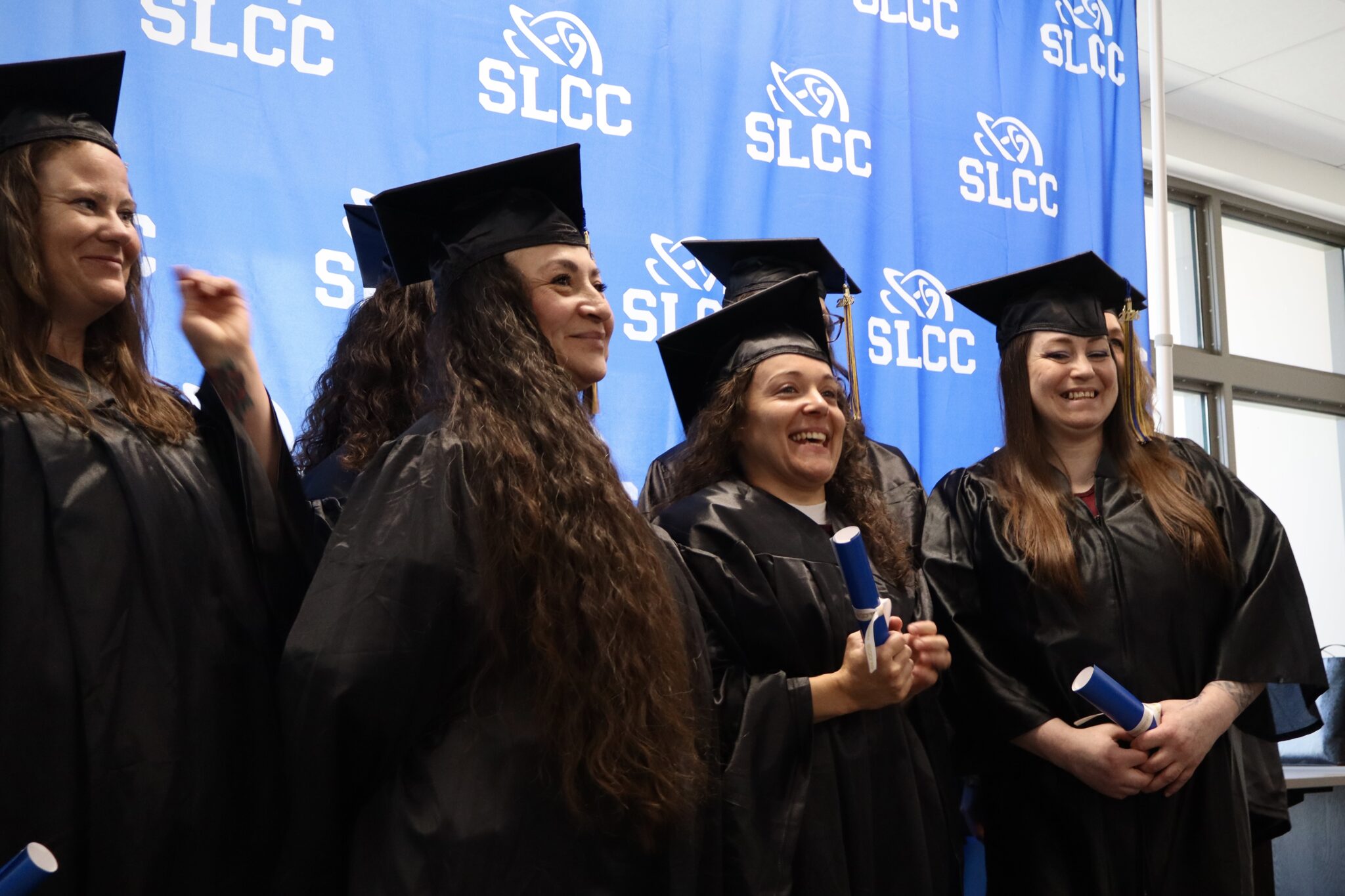
About three dozen men and women donned caps and gowns in Salt Lake City Monday, beaming as their names were called, shaking administrators’ hands and cheering on their classmates.
The graduates of Salt Lake Community College posed for pictures with family members in a scene typical of this time of year, except for the tall fences and barbed wire outside. The 34 students earned their associate degrees from inside the Utah State Correctional Facility, most with assistance from a federal grant program for low-income students.
They took classes at night and with limited access to laptops. Many penned essays by hand. But the biggest obstacles were mental and emotional, said graduate Kimberly Bettelyoun.
“Today we prove that determination can grow through concrete and that discipline can rise inside hard places, and that hope can survive, even when life has tried to bury it,” she said in a speech at Monday’s ceremony.
Most graduated with a two-year degree in general studies, others with concentrations such as history, business, anthropology and English.
State lawmakers also celebrated their achievement. As commencement speaker, Rep. Melissa Ballard encouraged the graduates to keep reading in the years ahead and practice staying grateful. Ballard, R-North Salt Lake, advised the group to focus on others, but not to let someone else’s opinion of them mean too much.
Sen. Derrin Owens also attended in support. Owens, R-Fountain Green, told journalists after the event that the program balances accountability with rehabilitation and he’d like to see it grow. If the state prison system didn’t offer this sort of opportunity, he said, it would simply be “warehousing” people, rather than living up to its name as a corrections agency.
Prison officials note that the vast majority of people incarcerated in Utah are released at some point. And research has shown those who earn associate degrees while behind bars are less likely to end up back in prison.
In their lives beyond its walls, Monday’s graduates can build on their degrees, transferring their credits to any other public college or university in the state. Others remaining at the prison can pursue a bachelor’s degree through a partnership with the University of Utah.
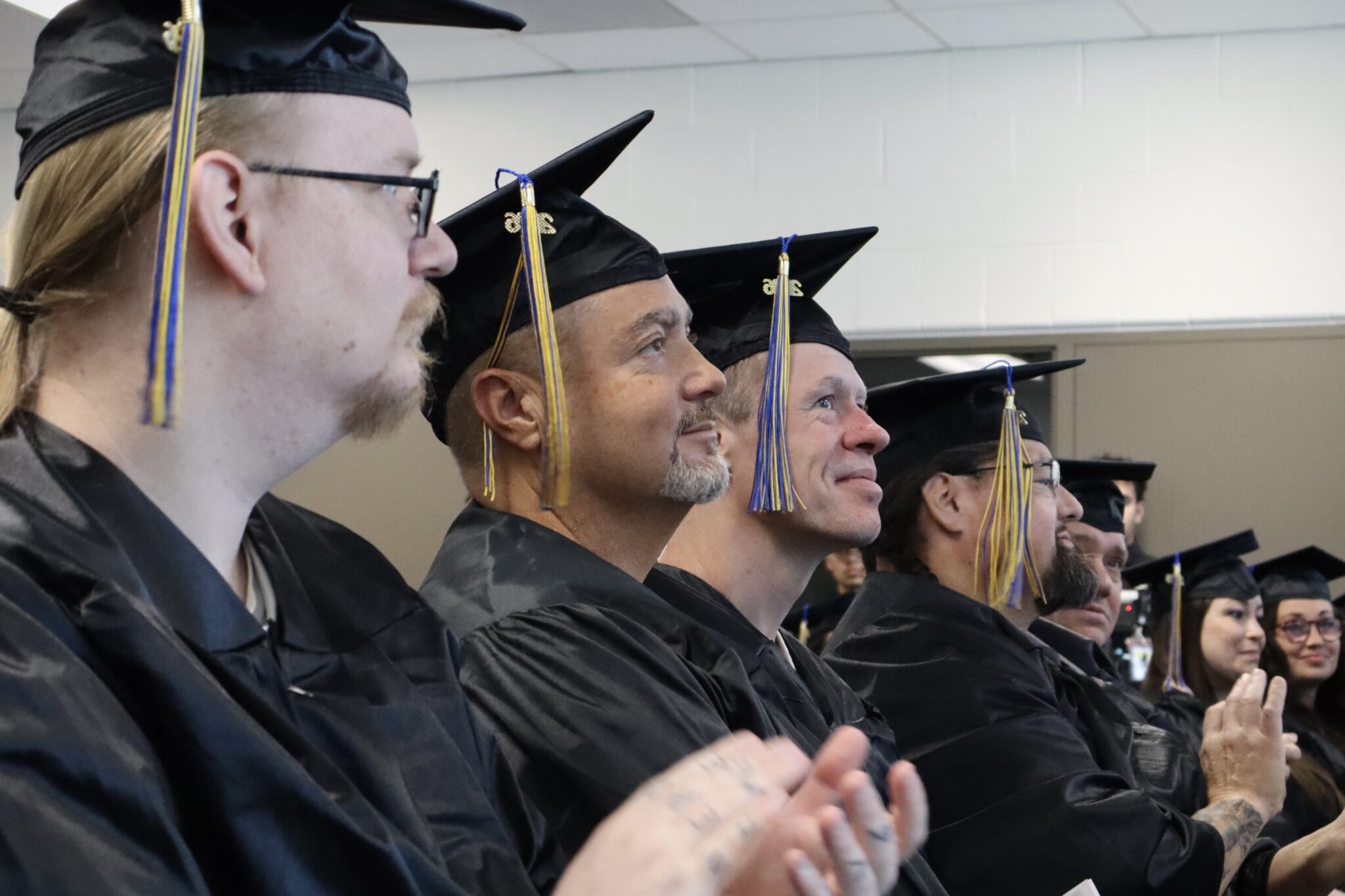
Salt Lake Community College President Greg Peterson told the group Monday they may not feel worthy of admiration, but they’ve earned it.
“I want you to know that we love your stories and we tell your stories,” Peterson said. “When we tell your stories, we acknowledge your past, but the power is in your future.”
After the ceremony, the men and women removed their caps and gowns and visited separately with loved ones and instructors over a lunch of sandwiches, chips and cookies.
The SLCC program began at the prison’s former Draper site in 2017 and receives ongoing funding from the state. The U.S. government also provides assistance, but that wasn’t always the case.
A 1994 federal law cut off access to federal financial aid for those incarcerated. After more than 20 years, the federal government experimented with restoring Pell grants for those in correctional custody on a limited basis in 2015. Then in 2020, it expanded access to the grants nationwide.
After the ceremony, Pailate Lomu’s eyes filled with tears as he said he’s still processing the milestone after many early mornings spent studying.
“Everything beautiful in life is hard,” he said.
Bettelyoun, for her part, said the program shows its students they can evolve, develop discipline and rebuild their confidence, but it takes determination every day. She said she’s been working toward a goal of becoming a better person in prison with each passing hour.
“Every minute, I’m going to get something out of it,” she said.
This story was originally published May 12, 2026, by Utah News Dispatch.