Salt Lake City and its surrounding mountains have played major roles in the development of both recreational and search-and-rescue climbing.
The Salt Lake Climbers Alliance reported that Little Cottonwood Canyon became the first recreational climbing area in America to be listed in the National Register of Historic Places. This climbing culture, which dates to the 1960s, has continued to grow as more people in Salt Lake City realize the quality of the climbing areas around them.
SLCC courses teach new climbers the fundamentals
Salt Lake Community College offers rock climbing courses (HLAC 1527 and 1528) that prepare new climbers for outdoor terrain. SLCC partners with Dimple Dell Rec Center in Sandy and The Front Climbing Club in Salt Lake City to teach the classes.
Most of the classes are taught by two instructors: John Gillham at Dimple Dell Rec Center and Hilary Silberman at The Front Climbing Gym. Each has spent approximately 30 years climbing and watching the sport grow and evolve.
Gillham recalled that early in his climbing career, it was purely an outdoor sport, and Utah climbers used a traditional method of placing removable gear into the cracks of the rock to catch them if they fell. This is often referred to as “trad climbing.”
As climbing grows in popularity, more climbers are bolting routes. Bolting is a similar concept to trad but uses permanent gear.
With the increase of bolted routes, Utah has become more popular among beginner and experienced climbers alike.
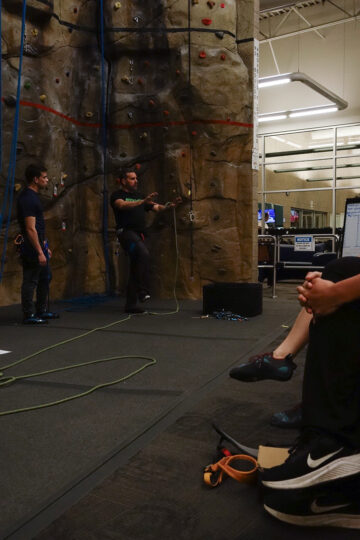
Eventually, indoor climbing gyms began opening across the country, providing places for climbers to train even during the winter offseason.
Silberman, who teaches both SLCC’s climbing classes as well as competitive teams at The Front Climbing Gym, said she sees an increase in accessibility.
“I mean, first of all, when I started climbing, there were no climbing gyms,” Silberman said. “So, you learned to climb outside, you had a mentor who would take you outside and kind of teach you the ropes. And then with the advent of climbing gyms, over time … it’s become more accessible.”
Beyond accessibility, Gillham has noticed another large shift in the climbing community.
“It [indoor climbing] also has changed climbing to become much more social,” said Gillham. “You’ll do a lot more climbs in an evening, and be hanging out with friends, and socializing the whole time.”
Climbing structures
With the increase in indoor climbing, both instructors have expressed concern for the safety of new climbers outdoors. Although the environments share similarities, certain indoor skills don’t transfer to outdoor climbing.
These concerns are a priority in both climbing classes: Rock I, which focuses on the fundamentals, and Rock II, which is more advanced.
Each gym used by SLCC has unique climbing walls and setups, and instructors develop their own ways of preparing students for climbing both indoors and outdoors.
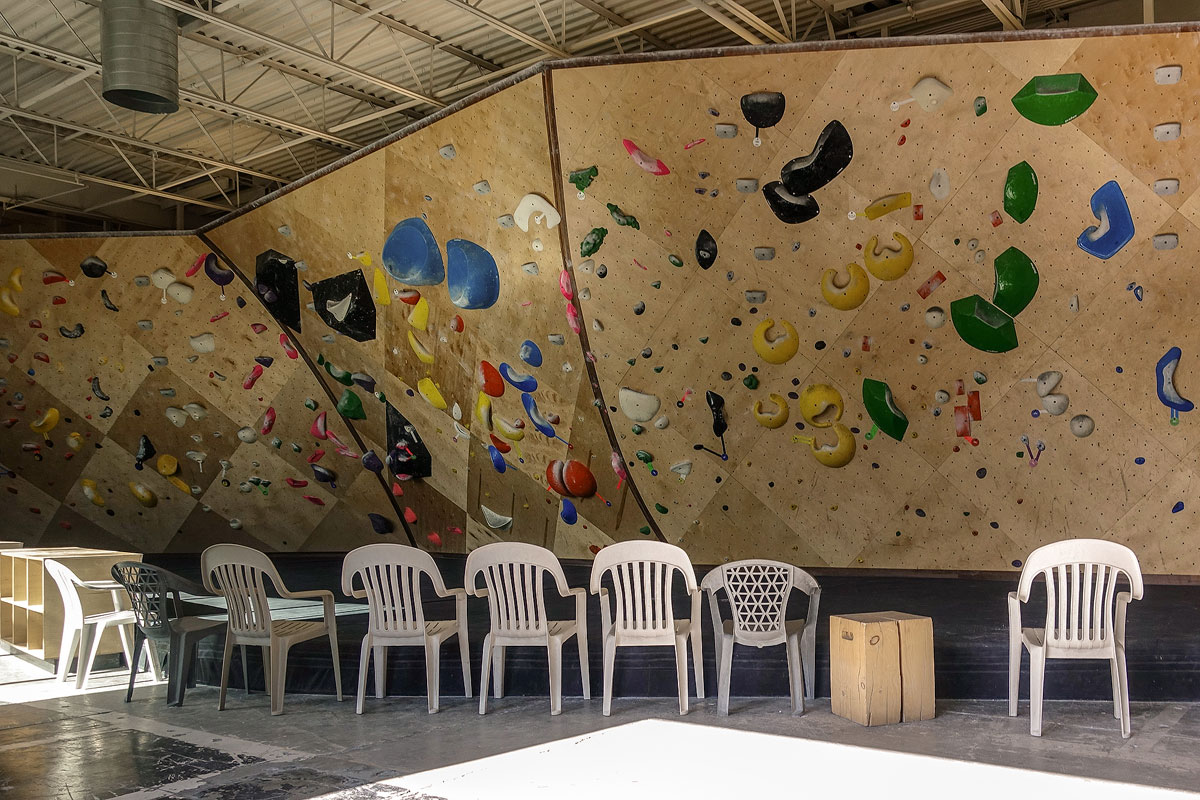
Both gyms have climbing walls built on a frame made of steel beams. On top of this frame, The Front uses wooden panels, which plastic holds are then screwed into. The flat surface allows easily visible holds that minimize the risk of injury on jagged or outcropping surfaces.
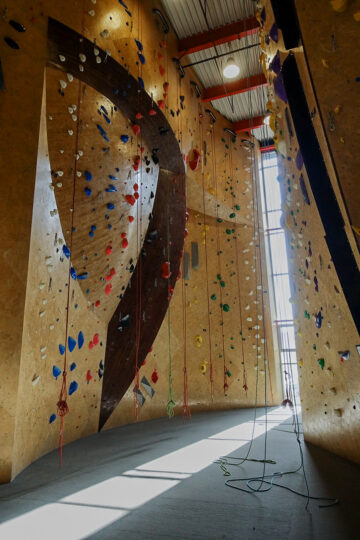
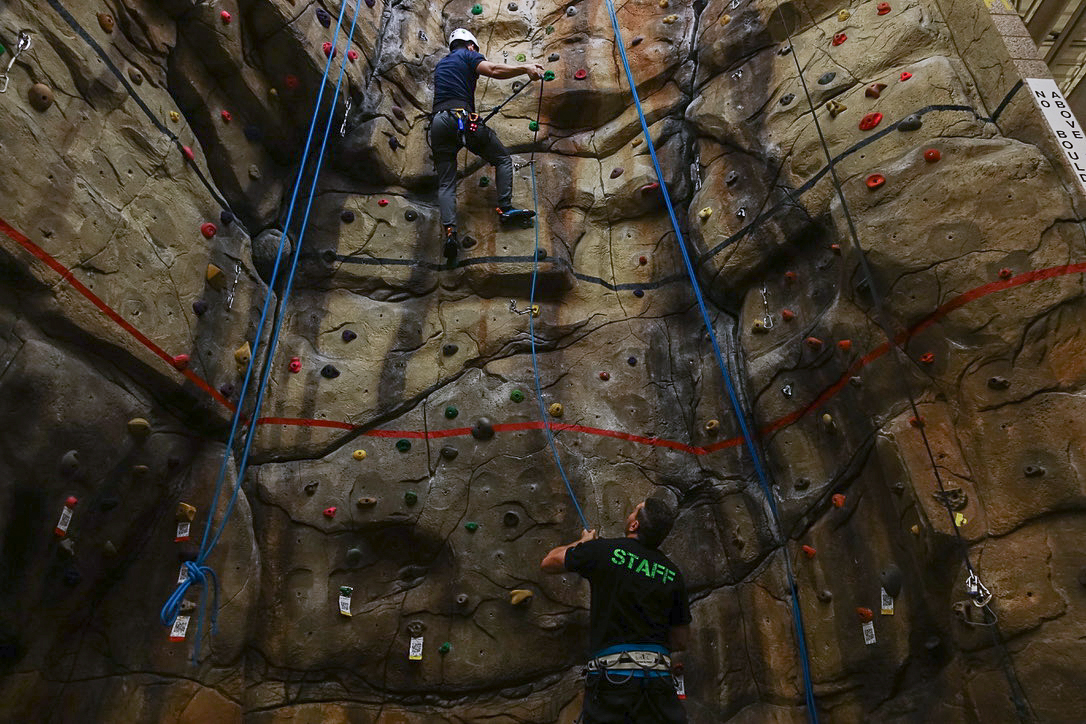
Dimple Dell uses sculpted plaster over its frame with screw holes to attach additional climbing holds. This gives a rock-like surface, which is better suited for practicing outdoor climbing.
The Front has a larger selection of routes than Dimple Dell, ranging from a shorter, ropeless form of climbing called bouldering to styles like top rope and lead climbing, which use full-height walls and require ropes. Because of this variety, the Rock I class focuses on bouldering and works its way to top rope over the semester. Rock II begins at top rope before getting into lead climbing, which is more dangerous because climbers can fall many feet before the rope catches.
Dimple Dell only has one full-height wall, so the Rock I class begins on top rope and progresses towards lead climbing by the end of the semester. The Rock II class then focuses on outdoor styles of climbing, beginning with lead climbing before getting into the many forms of trad climbing.
Student experiences
Students taking Rock I and II have varied reasons why they started climbing. For some, it was their first time experiencing the sport, while others had climbed a few times but wanted to get better.
SLCC student Benjamin Yeager explained that when he was growing up, climbing seemed too dangerous, but said taking Rock I allowed him to approach it safely.
“I started doing a lot more [climbing],” Yeager said. “And it’s been really cool to get to experience, overcoming some of those fears and build that resilience.”
Yeager recently started helping instruct at Dimple Dell, where he shows other students how to be safe and confident in their own climbing.
Frank Forbush, a student enrolled in both SLCC rock climbing classes, said the courses at Dimple Dell offered a lot.
“They’re awesome,” he said. “Really well taught. They teach you something you can’t get taught anywhere else. Trad climbing and stuff like that.”
For more information on SLCC’s rock climbing classes and to see how they fulfill elective or program requirements, visit the online course catalog.