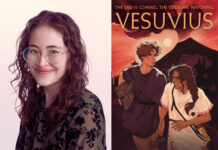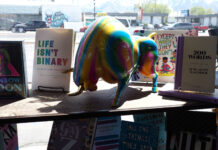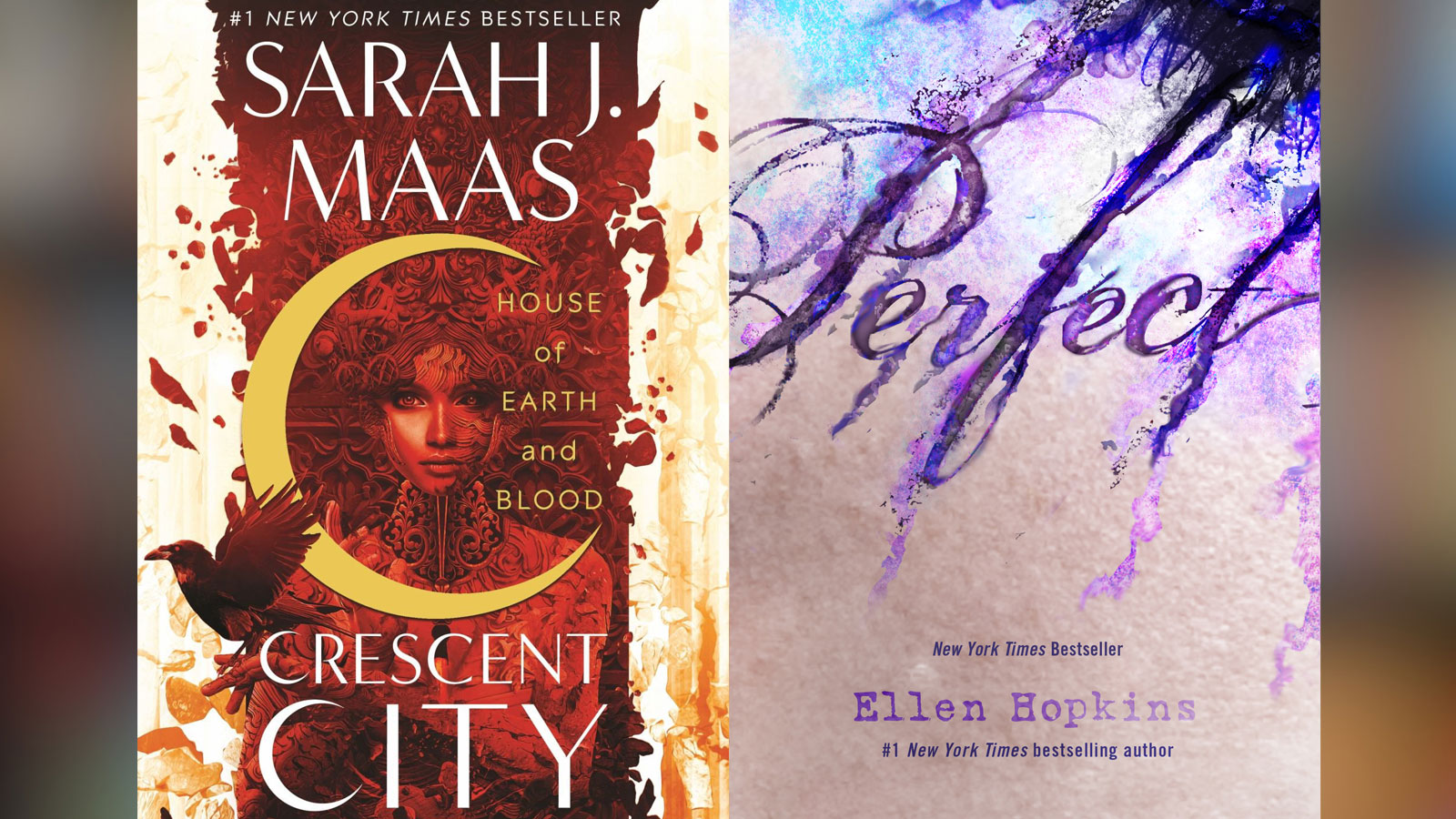
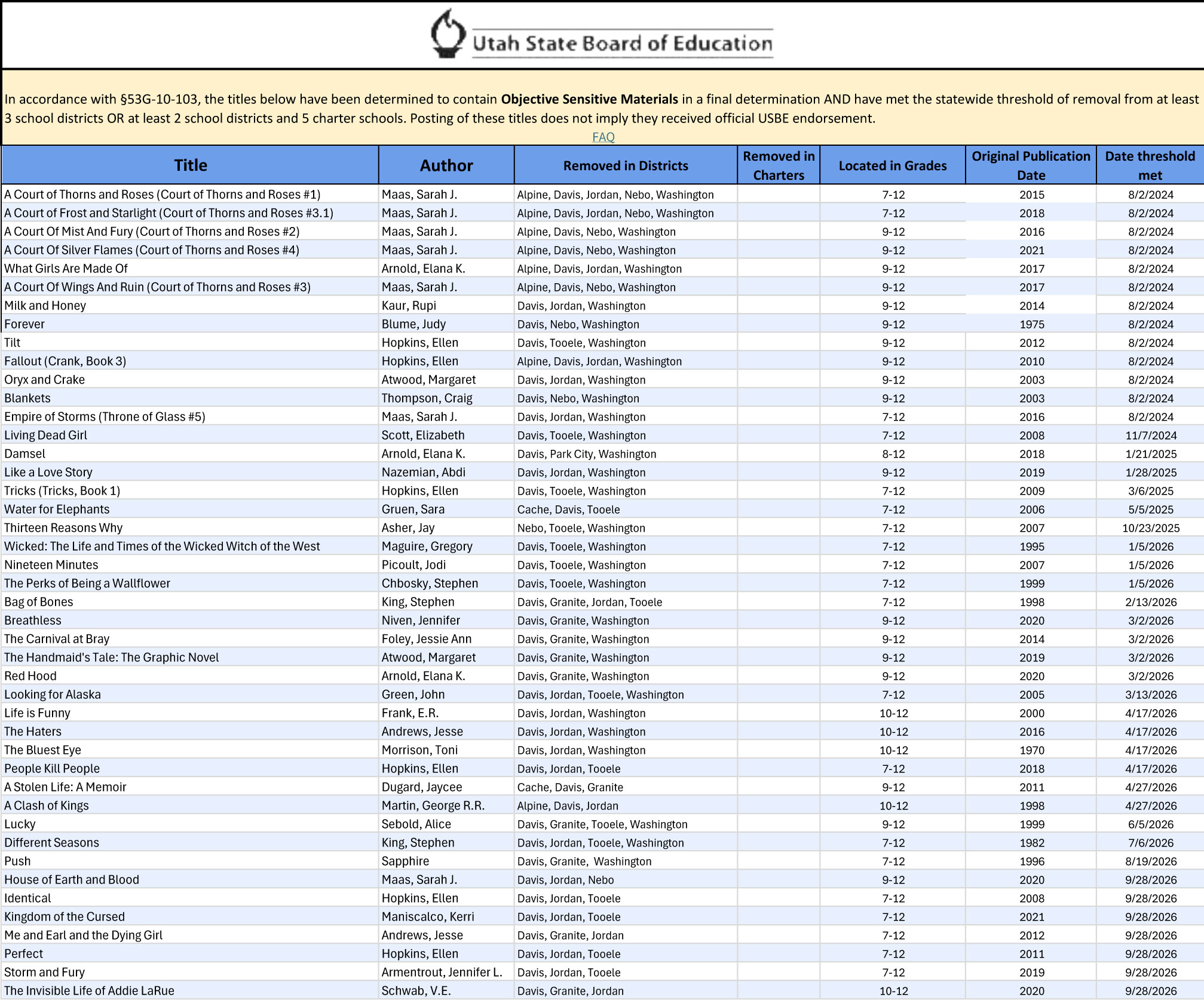
Utah banned seven more books in K-12 schools on Sept. 28, bringing the state’s total to 44. This was the largest single-day ban since lawmakers amended the Sensitive Materials law in 2024, which retroactively pulled 13 titles from shelves.
The latest removals also highlight a growing debate over who ultimately decides which books students can access.
How local decisions become statewide policy
Before 2022, local districts decided which books to pull from their shelves, but the HB 29 amendment created a statewide removal process. The law states that a book must be removed from every public school in Utah once three school districts, or two districts and five charter schools, determine a title contains “objective sensitive material.”
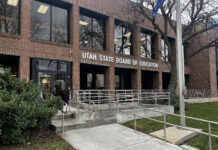
According to the Utah State Board of Education, statewide book removals are not triggered by complaints alone.
“A title must receive qualifying determinations from multiple LEAs (local education agencies, including school districts and charter schools) before it reaches the statewide removal threshold,” said Marie Denson, USBE communications and media relations officer. “So, one district cannot independently cause a title to be removed statewide.”
However, the data shows that decisions driving statewide removals are concentrated among just a handful of districts. Davis and Washington school districts participated in determinations involving 43 and 32 of the state’s 44 removed titles, respectively.
In total, only nine school districts have submitted complaints that contributed to book removals.
“Under HB 29, all districts must remove an item if three or more districts find that the item is objectionable,” said Grey McLean, teen librarian for the Salt Lake City Public Library’s Main Branch. “Think about that — there are 41 districts statewide, and any three of them can overrule the other 38.”
McLean argued that the law ignores the nuances of book selection and assumes the same books are right for every student.
Ban vs. removal
Books pulled from shelves are not officially referred to as “banned,” a distinction Denson said is important.
“A statewide removal does not mean that a student is prohibited from possessing the book,” Denson said. “A student may still bring to school a copy they personally purchased or borrowed from a public library. The statewide removal instead addresses the material’s availability and use within the public-school setting.”
McLean disagreed, calling the terminology “a distinction without a difference.”
“There’s a lot of ways to functionally remove access to a book without literally destroying every copy statewide,” he said.
McLean said removing books from schools can create a stigma that discourages students from seeking the title elsewhere. He also said that removing books limits access to stories where readers can see themselves and others reflected.
“Many of our students will see themselves in the pages of books like ‘The Bluest Eye’ or ‘Tilt,’ and they deserve access to books that can help them understand themselves, contextualize their experiences and heal,” he said.
McLean argued that books covering difficult topics benefit all students by exposing them to different perspectives and helping build empathy.
For McLean, who works with young readers every day, this issue is bigger than the individual titles being pulled from shelves.
“[Reading] prepares them for a world where other people have different experiences than they do, and it helps them respond more compassionately to situations they don’t understand.”
Whether the books are called “banned” or are “removed for sensitive material,” the list of books pulled from school libraries will likely grow.
The debate is no longer just about which books belong on school shelves, but also about who should be making those decisions on behalf of students across Utah.