

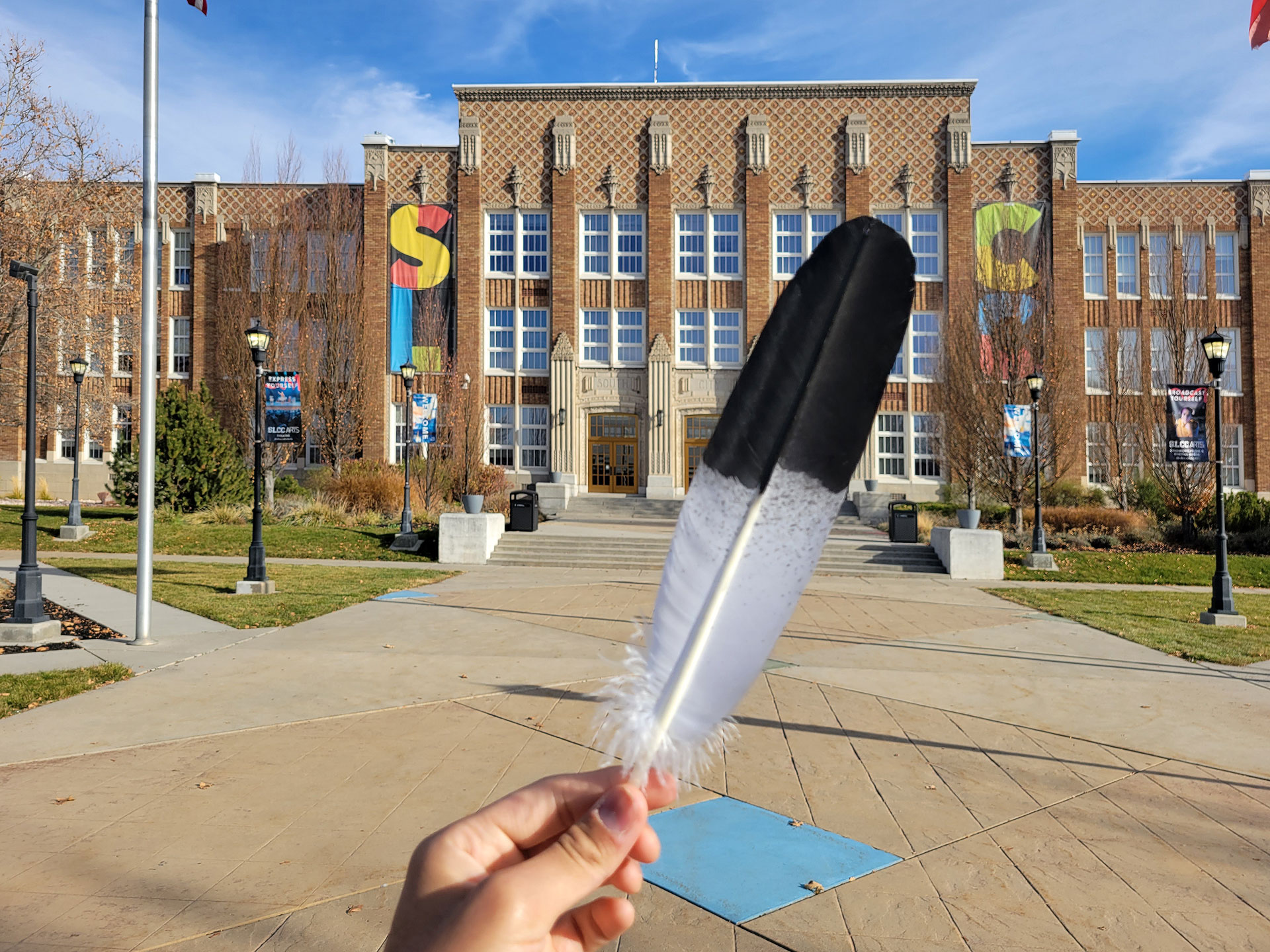
Native American students at Salt Lake Community College say finding representation and community on campus can be challenging, even as the college remains one of Utah’s most diverse institutions. However, Native Americans represent only 0.76 percent of the student body.
Native students attending tribal colleges and universities are offered support such as a sense of belonging, cultural preservation, and substantial financial aid. At predominantly white institutions such as SLCC, their experience can look quite different.
Choosing SLCC
Nathanuel Cohoe is a member of the Navajo Nation and Mexican. Born in Utah, Cohoe, a first-generation college student, is deciding between nursing or art as his intended major.
“I wanted to be educated,” said Cohoe. “It was something that I knew was my calling.”
Few of his family members have had the same opportunity.
“I’m currently breaking a lot of cycles, because most of my cousins on my mom’s side didn’t graduate high school,” said Cohoe. “It was a big deal for me to want to graduate high school and then go and get a higher education.”
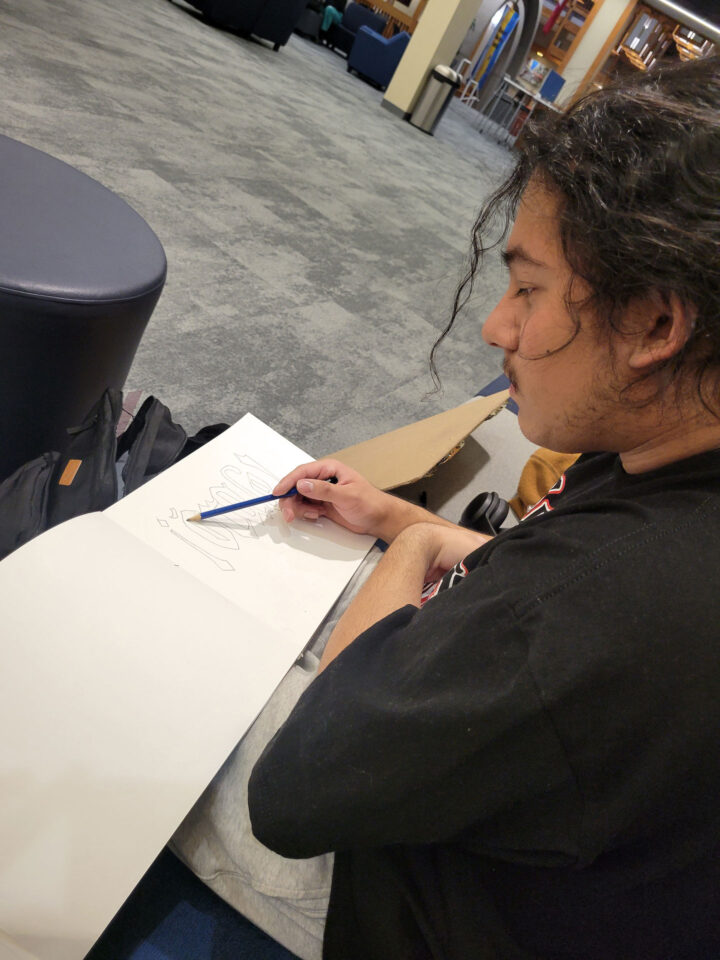
Sabrina Hidalgo, from the Yankton Sioux tribe in South Dakota, chose SLCC for the electric apprenticeship program and its affordability.
Eya Spotted Elk, a business major and member of the Northern Cheyenne Tribe, said a major reason she chose SLCC was the Native American Community Scholars & Fellowship Program, which covers tuition for students from federally recognized U.S. tribes.
“It’s been really nice to have, because it encourages Native students to pursue their education,” Spotted Elk said. “I was really worried about being able to afford further education, and it gives me that opportunity, too.”
Valene Peratrovich, who is Tlingit, Unangan and Athabascan, found SLCC to be a good fit. Originally from the West Coast, Peratrovich studied at Oregon State University before moving to Salt Lake City and applying to SLCC in 2021.
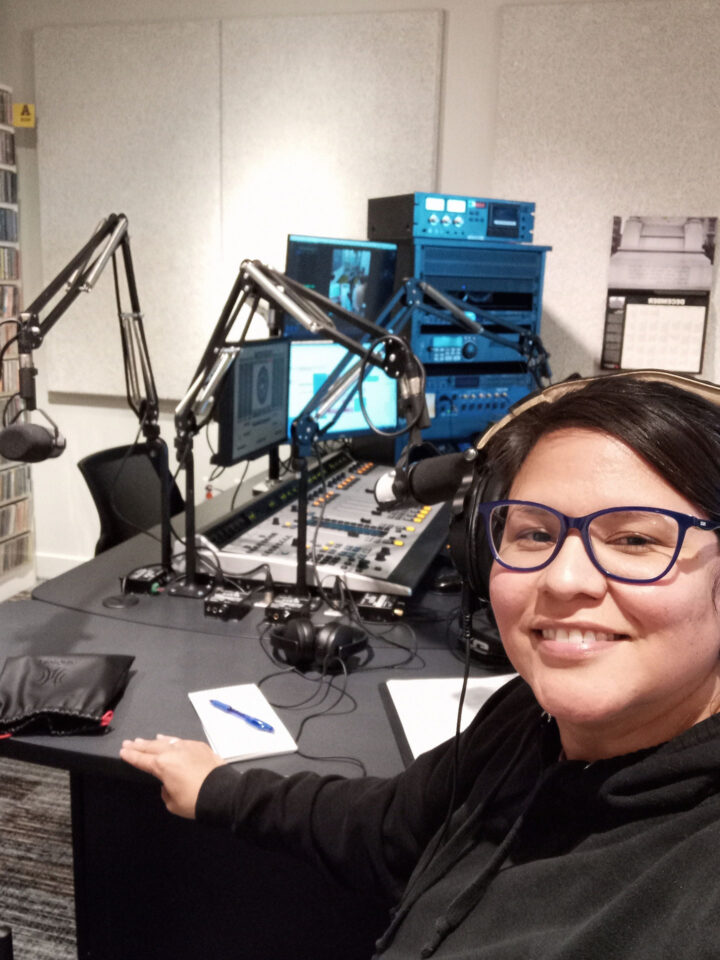
“I attended SLCC because I wanted to learn everything I could about radio production, which got me into the industry at 90.9 FM KRCL,” said Peratrovich. “After I graduated in radio production, I went on to major in film production. I loved working behind the camera.”
Representation and finding community on campus
Native students say they experience a lack of representation in many aspects of their lives, especially in higher education.
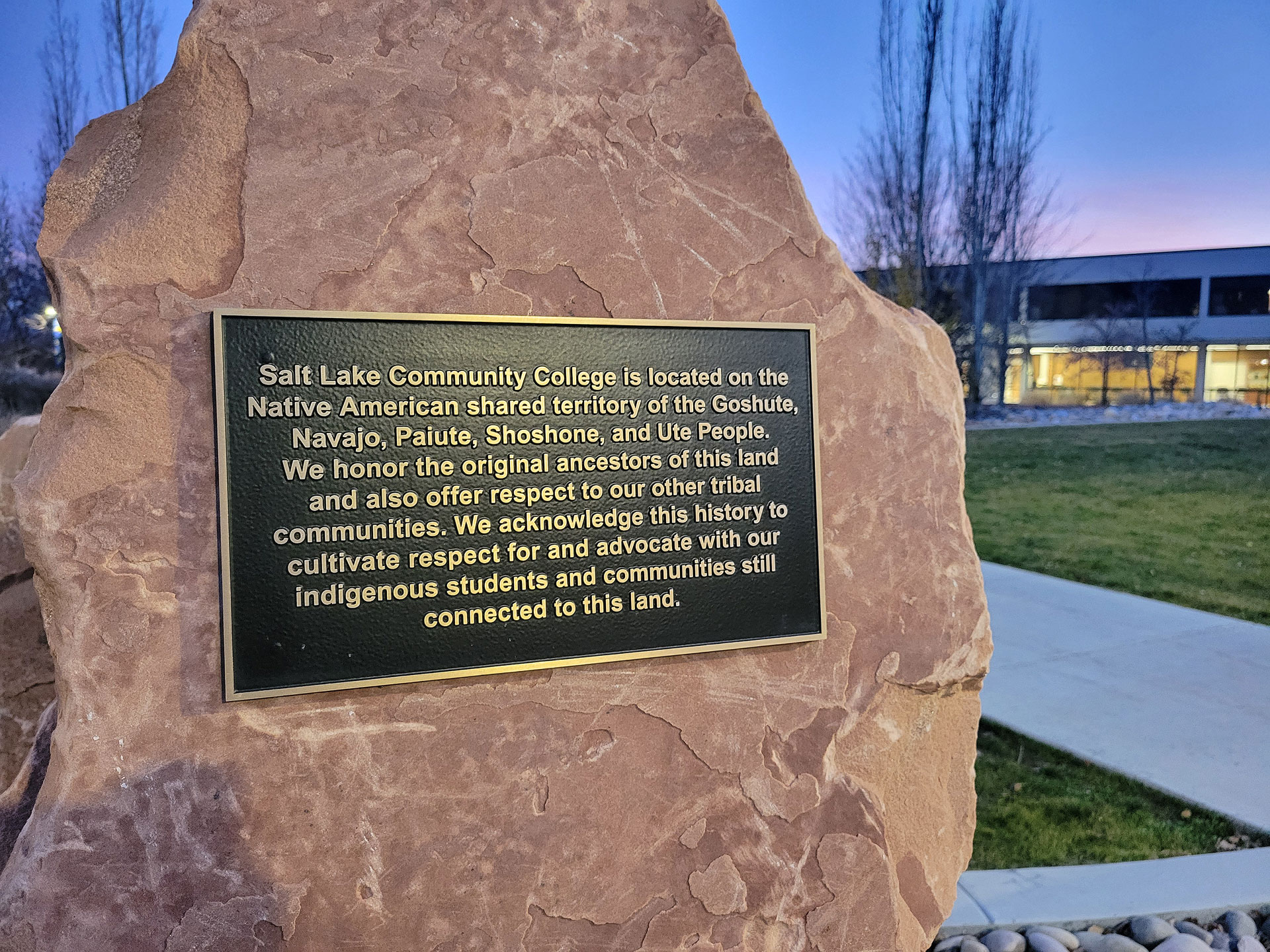
SLCC has made efforts to recognize and honor Native Americans in Utah with land acknowledgement plaques installed on several campuses.
Additionally, the college hosts the Native Indigenous Student Union, or NISU, which aims to “share and cultivate appreciation for all Native and Indigenous Nations,” according to its website. Spotted Elk serves as the union’s social media chair, promoting Indigenous students and events.
“I don’t think there’s enough [native representation], but I also think that the representation out there for SLCC is good,” said Spotted Elk.
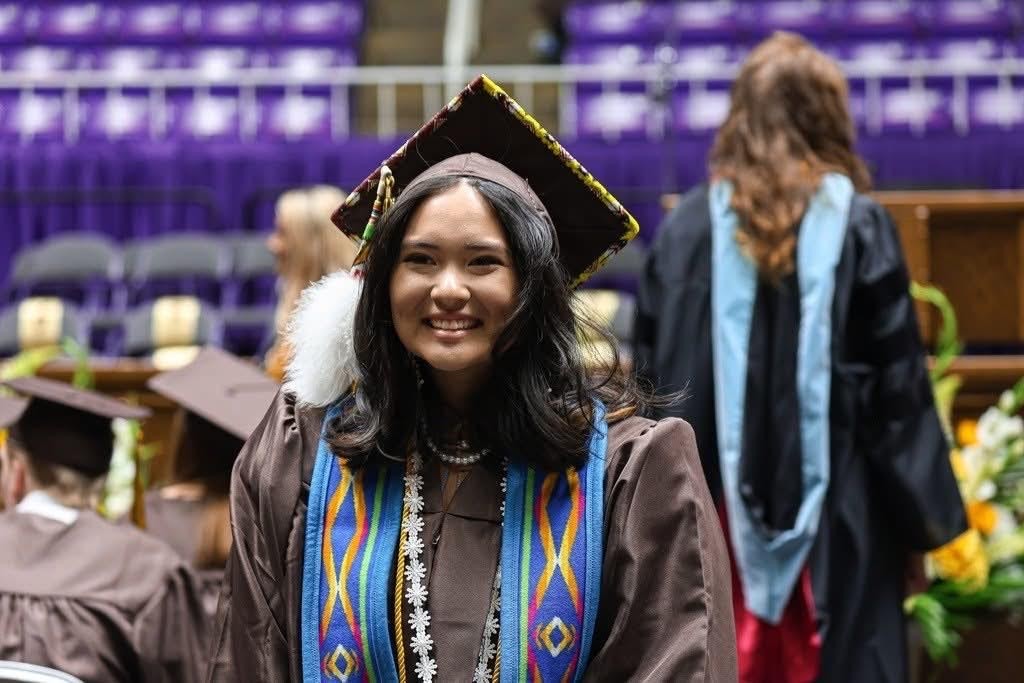
As a Native American person from Alaska, Peratrovich worked on finding community and a sense of representation before coming to SLCC.
“I didn’t feel represented, but I was so lucky because I already had gone through my undergrad at Oregon State University,” said Peratrovich. “And so, I went through those hardships of not seeing community or representation around me, so I already knew what to do.”
While at Oregon State, Peratrovich became involved in the Native American Cultural Center, the Native American Student Association and the American Indian Engineering Society. She also helped plan powwows and salmon bakes on campus.
When she arrived at SLCC, she immediately joined the American Indian Student Leadership, now known as the Native Indigenous Student Union.
“Growing up Native, we identify so much of our identity as rooted in community,” said Peratrovich. “Worth is found through community, and so anything you can do to form that is, like, such a big part of why it gives purpose.”
Despite some students finding a sense of community through campus resources, for Cohoe, it is still missing.
“I think that there’s a lot of community-based groups,” said Cohoe. “Since it’s my first year, I’m, like, feeling [it] out, but I do feel like there’s a sense of community. I just need to do my part in being a part of it.”
Staying connected to Native culture
Family and cultural practices play an integral part in maintaining Native identity.
“I’m a powwow dancer,” Cohoe said. “I’ve been going to powwows my whole life.”
A powwow is a celebration where Native Americans gather to dance, sing and meet with friends and relatives.
“Sometimes you can win money, but you shouldn’t dance for the money,” he said. “You should dance because you’re representing yourself, your community, but most importantly, your family.”
Spotted Elk, whose tribal homelands are in southeastern Montana, said visiting helps maintain her cultural ties.
“My family likes to go on trips back to Montana for hunting purposes,” she said. “While up in Montana [it] gives, like, reconnection to culture. I get to see a lot of family that I don’t see often and just be in nature and be around family.”
For Peratrovich, who went back to school in her forties, leaving home proved difficult at first.
“It’s hard because my people are in Alaska,” she said. “… People who have to find and make that journey and go away from home, that’s a sacrifice we all have to make.”
Before attending SLCC, Peratrovich stayed connected by attending sweat lodges and ceremonies while searching for purpose and shifting careers.
“I’m just lucky I have my own family; I have my husband and my boys,” said Peratrovich. “That does so much for maintaining that connection.”
Hidalgo said her family is an important part of her connection back home in South Dakota.
“I try to stay in contact with my cousins that still live out there in the reservation,” said Hidalgo. “… Most of my family [was] originally born there, and [now] they live here [Salt Lake City], so my grandma, she’s the one that kind of keeps me connected to what they do back home.”
How SLCC can better support Native American students
Peratrovich described the impact that attending college can have on Native students, including SLCC.
“I think it’s important for higher ed institutions to understand that as Indigenous people … it is such an intense time because it’s such a separation of us from community, from our immediate families,” explained Peratrovich. “A lot of our identity is centered on community, and our people have been through so much; so when we separate, [that] is when we feel the impact of the trauma that we have gone through, either collectively [or] individually.”
She said the challenges that Native students face often go unnoticed; being isolated from family and culture while trying to maintain tribal identity can lead to feeling homesick and difficulty in balancing tribal responsibilities with coursework.
“And then there’s other things, like, we’re dealing with depression, we’re … searching and trying to figure out who we are as people in our identity,” continued Peratrovich. “… We need that scaffolding or that support around us to help us understand that that’s what we’re going through.”






Hello, my name is Elise Pawwinne and I seen the article. I was wondering if there is a way that I can join the NSIU, I am hopi and northern ute. I am just looking for native american clubs that I can join to fit in more.