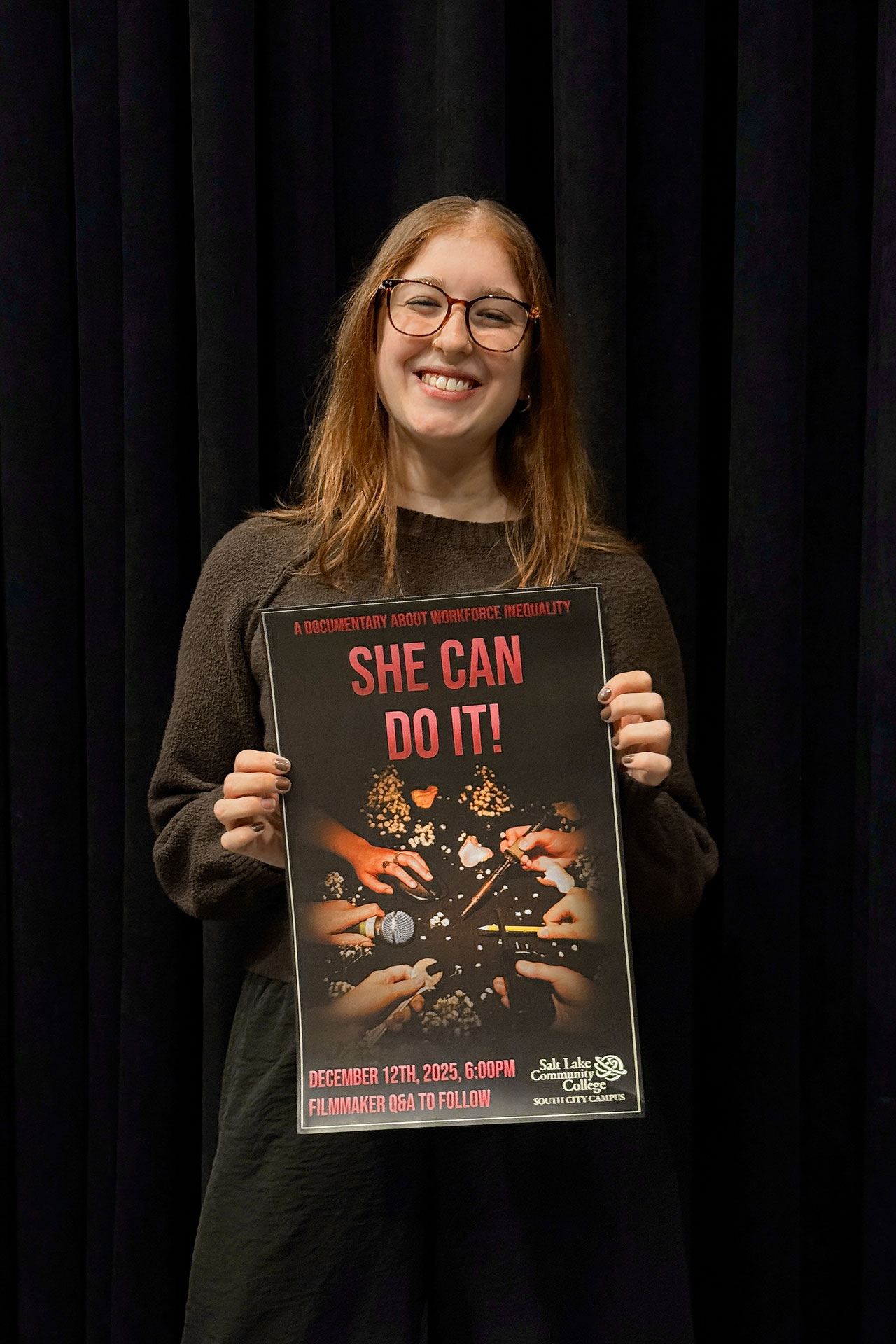
Salt Lake Community College film student Katie Neal confronts Utah’s workforce inequality in her documentary, “She Can Do It” — a 30-minute film that explores why Utah continually ranks last nationally in women’s equality.
The documentary features interviews with six professional women and explores how religious values, personal experiences with inequality and workplace barriers shape women’s lives in Utah. The film seeks to highlight the challenges women face and the steps needed for meaningful progress.
The film premieres on Dec. 12 at SLCC’s South City Campus, in the multipurpose room at 6 p.m.
The origin story
Neal’s vision for the documentary began with her experience as a young woman filmmaker; She entered the film industry at 16 through Spy Hop, a local media arts center for youth. Neal noticed her competence and strength, and that of other women producers, were treated differently from her male counterparts.
“It’s all those little things that kind of add up, you know? Questions like, ‘do you need help lifting that?’ Or, it’s people just assuming I know less,” said Neal.
Utah’s gender equality crisis
Utah has ranked as the worst state for women’s rights for 11 consecutive years, according to Utah News Dispatch. Research in 2021 from the Utah Women & Leadership Project at Utah State University also reported on Utah’s long history of persistent gaps in equality.
National studies also place Utah near the bottom for women’s equality. In 2013, the Center for American Progress graded Utah an “F” in its State of Women in America report, ranking the state 49th out of 50 based on factors such as pay gaps, poverty, women’s representation in the legislature, and infant mortality.
This data, alongside Neal’s passion for telling women’s stories, spurred her to create “She Can Do It,” an intimate look at the story of women’s workforce inequality in Utah.
Inside the making of ‘She Can Do It’
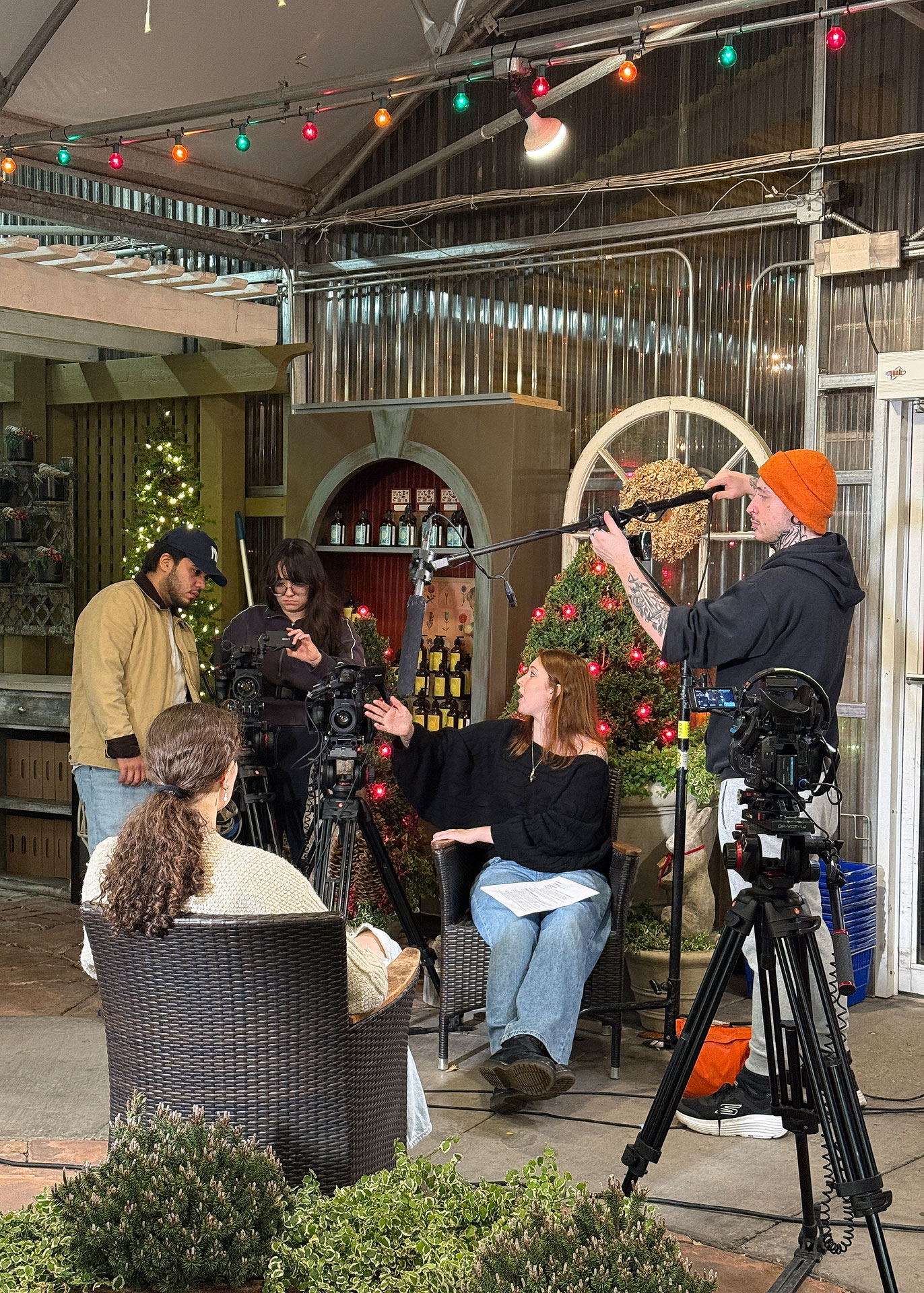
Students voted the documentary into production over ten other pitches in her Documentary II class at SLCC. Neal served as the director of the film, alongside a team of five other SLCC film students.
According to Tyler Smith, associate professor of film at SLCC, this is Neal’s third film featuring marginalized women. Last year, in Documentary I, Neal produced her first film, “I Am Woman.” Over the summer, she completed an Independent Study course, producing the film “Worn.”
“When she pitched this film this semester, she was hesitant to cover the same topic. To me, I think she’s just found her groove,” said Smith.
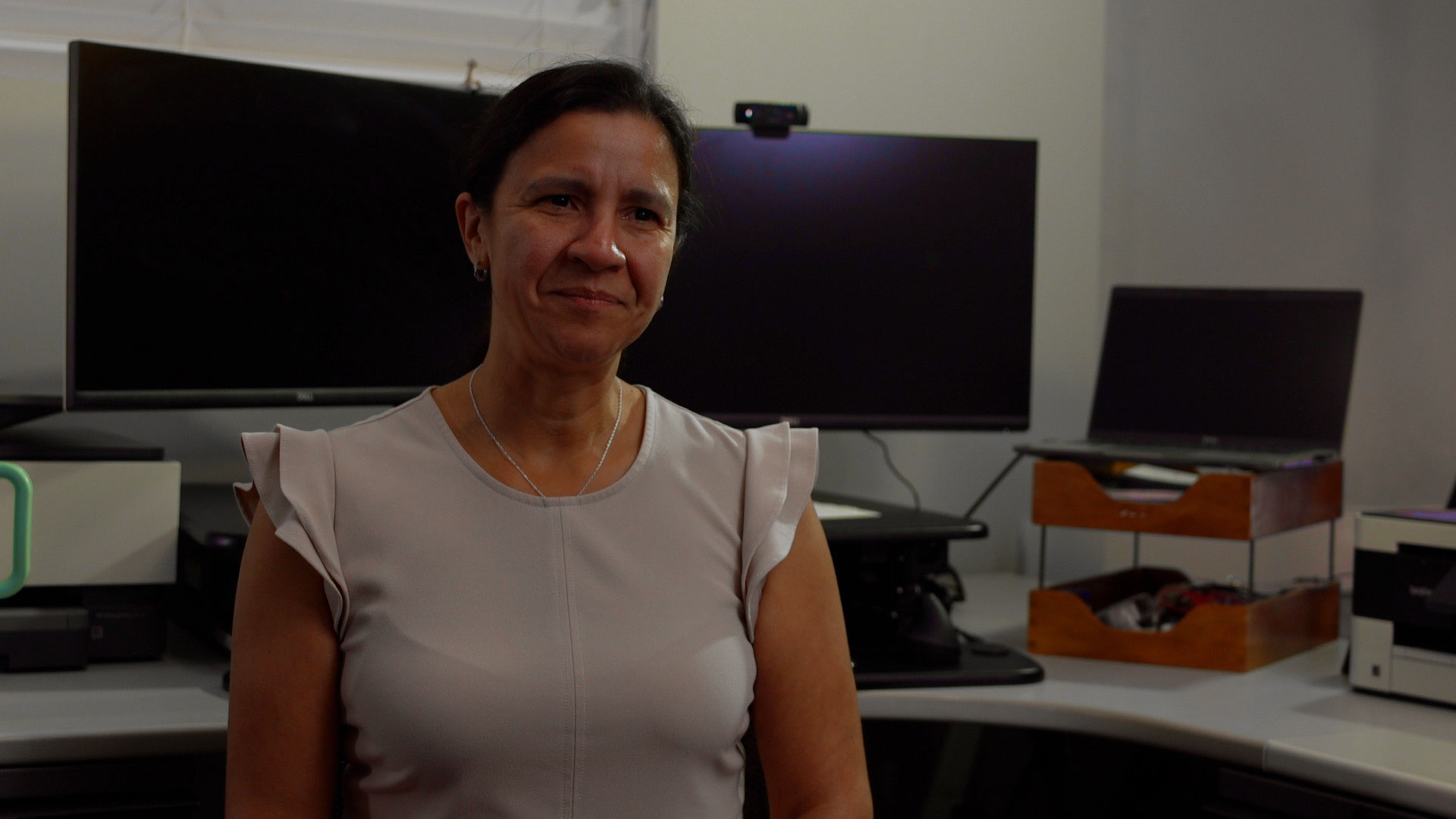
The documentary’s focus is on six women professionals, four of whom work in male-dominated fields: an audio technician, an engineer, a finance consultant and a facilities manager. The other two work in female-dominated fields: a zookeeper and a manufacturing technician.
At the outset, Neal’s goal was to understand the experience of each woman in their respective field, learn what invisible barriers may exist, and invite a conversation on how Utah can improve women’s rights in the state for future generations.
Workplace realities for Utah women
In the film, Luci, a 19-year-old zookeeper, said her position as an educator has been challenged by Utah’s traditional values of a woman’s place being in the home.
“There have been interactions with guests in public where my gender has made things uncomfortable. I was told one time, by an older man, that I shouldn’t be working and I should be at home and I’d never encountered anything like that before,” Luci recalled.

Sofia, 46, works as a facilities manager in a male-dominated field, managing a team including electricians, plumbers and technicians — 99% of whom are men. As a Colombian woman and mother, Sofia was the sole financial provider of her family for a period of time.
“I used to go to the LDS Church, and when I was earning good money, my husband quit his job to go to school full-time. At church, this guy kept asking, ‘Why are you working while he’s at home?’” Sofia recalled in the film.
“I’d tell him, ‘Because I earn more — he’s in school and helps with the kids.’ To that man, it was ugly,” Sofia said.
She also recalled a time when the bishop told her she shouldn’t be working on Sundays.
“And it’s like, well, who’s going to pay for the food? The church? Yeah — no,” said Sofia.
Steps toward meaningful change
A recurring challenge Utah women face is the expectations of who a woman should be and what a woman should be doing. A trickle-down of traditional values typically seen in The Church of Jesus Christ of Latter-day Saints. These ideas define what is appropriate for a woman and what she is “fit for” regarding physical or intellectual capabilities.
The film argues that for Utah’s women to progress — religious or otherwise — gender inequality must be understood and confronted so that all women’s rights in Utah can improve.
Neal hopes sharing these stories will bring solidarity to the women of Utah, and that progress toward women’s equality in the workplace is on the horizon.
“I strive to spotlight women’s voices in my work, and I think this documentary will showcase a group of women that is rare to see in Utah,” said Neal.
Production of the film took over 11 weeks to plan, film, and edit. The SLCC film team of five included cinematographers; Olga Pedraza-Cano and Alondro Garcia, grip/lighting; Sylvia Jacobs and Jose Mercado; and sound/editor Oakly Midkiff.
To learn more about research toward actionable change, The Institute for Women’s Policy and Research shares “10 specific ways Utah can improve its ranking as the worst state for women’s equality.”