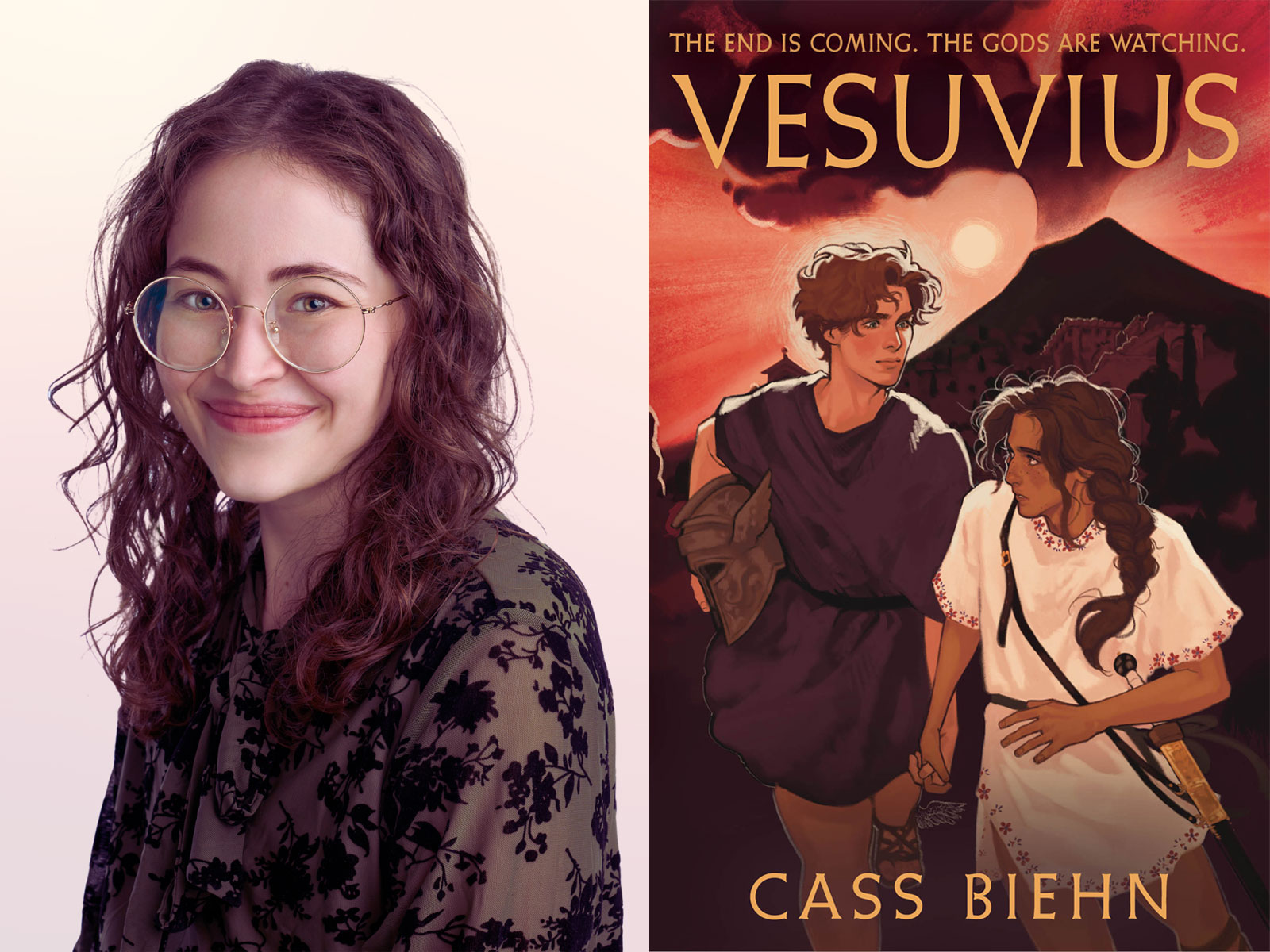
Utah ushered in Banned Books Week — which ran Oct. 4-10 — by adding seven titles to the state’s K-12 banned books list.
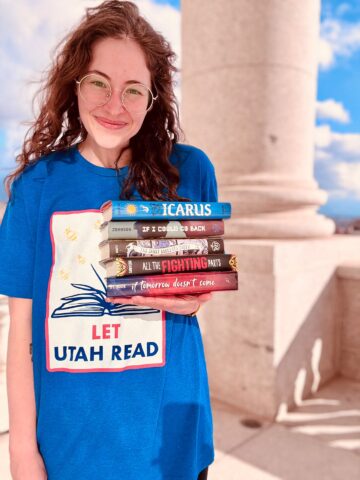
Local author and Salt Lake Community College alum Cass Biehn recently shared their views on book bans and the importance of keeping literature accessible. Biehn also holds a Master of Library Science from Aberystwyth University in Wales.
The following Q&A has been edited for length and clarity.
How did the books you read during your time in K-12 shape how you read and write literature?
I’d be nowhere if not for the books I read as a kid. Books were my safe space, where I was able to see my experiences reflected in characters. Growing up queer in a household and society that were profoundly unfriendly to those with my identity, I needed books to prove that queer hope was possible.
I vividly remember my first encounter with a queer character in a mainstream book series — Nico DiAngelo from Rick Riordan’s Percy Jackson novels. I was 15, and simply seeing a character say, on page, that he was queer, was enough to shoot life into me. I realized in that moment there might be room on future bookshelves for my queer characters. I began writing for people like me, who needed their experiences reflected back to them. I’ve carried that with me ever since.
How do K-12 book bans impact readers of all ages?
Reading is one of the most powerful ways to foster empathy, especially for young people, but for adults as well … The more we’re exposed to diverse perspectives, the better equipped we are to see from other points of view.
Book bans disproportionately impact marginalized authors and readers. According to data from PEN America and the American Library Association, the books most at risk of being banned from school libraries are those by and about BIPOC and Queer individuals … When we deny readers the chance to choose their reading material, especially materials that differ from their own lived experience, we create silos that empathy cannot thrive in.
More than that, for the marginalized readers who have few other opportunities to be in community with those who share their identities, book bans further their feelings of isolation.
The same way I was desperate as a teenager for queer characters, countless lonely young readers rely on media to feel seen and validated and understand their place in the world. These feelings stay with you, well beyond grade school. The more we restrict books from incredibly vulnerable population[s], the more we tell them — society, too, will have no place for you.
Having a master’s degree in library science, do you feel bans can shift how readers engage with literature?
A thousand times, yes. Book banning removes choice from readers, and it’s an inherently political act of censorship. I’m far from the first to say this, but I’ll repeat it because it’s true: look to all of history, and you’ll find it’s never the “good guys” who stand on the side of banning books.
Education experts at American University in Washington, D.C., suggest that book banning and censorship discourage discussion and undermine critical thinking and exploration of complex social themes. When readers don’t feel empowered to engage critically with the material they encounter, they become more susceptible to misinformation and disinformation.
Do you feel that book bans challenge the ethical practices learned while earning your degree?
Absolutely. The responsibility of a librarian is to cultivate access to information, and book bans disempower their ability to do so. Librarians must have the power to create meaningful collections of materials, where books are positioned in proper context with one another, and diverse perspectives are made available.
Banning books takes away that power — and it removes opportunities for the public to engage with material critically. When librarians are forced to remove items from their collections according to a political agenda beyond their control, they’re unable to perform the most vital part of their job: upholding intellectual freedom.
Did you experience anything similar to America’s push for book bans while studying in the UK?
As of 2026, the UK does not have any government- or state-wide banned book lists like the U.S. When I brought up U.S. state-wide book bans in class discussions, my professors were consistently surprised by how extreme they were.
But censorship attempts are not unique to the U.S. Book banning is a worldwide issue. Challenges at an individual school level can have ripple effects on other schools, districts, systems, and beyond. U.S. book bans directly influence and fuel rising removal requests and censorship elsewhere, including the UK. Librarians there note that soft, informal title challenges are on the rise. Left unchecked, they can escalate into more sweeping policies.
What affects one school library can and will impact the broader system. Bans are never without consequences.
Do you have any recommended banned books?
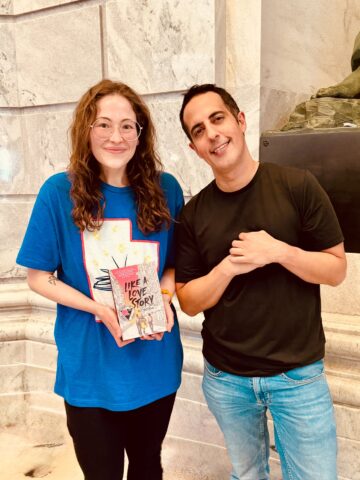
“Like a Love Story,” a queer novel by Iranian American author Abdi Nazemian, is one I point to most often. It’s a profoundly moving and important story about identity, self-expression, and queer history … and it’s banned in Utah schools.
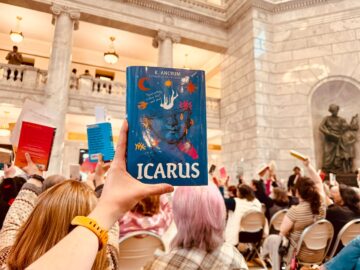
In February, Abdi spoke about book banning during a read-in at the Utah State Capitol building. After his talk, I had the chance to meet him and express my gratitude for being a queer writer I admire, as a fellow queer author. [The fact] that Abdi was willing to fly to Utah and speak on his experience is an act of love, bravery, and community I won’t soon forget.
How can others get involved?
Let Utah Read is an incredible coalition of librarians, educators, activists, parents and organizations determined to preserve the right to read for every Utahn. I highly suggest signing up for their newsletter for the latest updates on book banning in the state, and I encourage everyone to attend their events to get involved.
As a lifelong Davis County resident — a county whose school district drives the vast majority of public school book bans in the state — I’m particularly close to their local chapter, Let Davis Read. Wherever you are in the state, please keep these students in your hearts and actions. I was a kid in this school district once, and I’m extremely worried about their choices being stripped away. But I’m determined to continue advocating, as an author and a community member, for their intellectual freedom.
Biehn’s first novel, “Vesuvius,” is on shelves now, and they have two additional books slated for release in 2027 and 2028.