Book bans in Utah’s K-12 schools have increased due to House Bill 29, a law passed in 2024 that lawmakers say is aimed at protecting children from illicit pornography and other material that they define as sensitive. As of Jan. 5, a total of 22 books have been banned statewide, the most of any state. As the number of banned books increases, it has sparked a larger discussion about censorship and access to controversial or sensitive topics by minors.
Legal challenges
On Jan. 6, a federal lawsuit, Kurt Vonnegut Estate v. Brown, was filed against the Utah State Board of Education and Utah Attorney General Derek Brown, alleging that H.B. 29 violates the First and Fourteenth Amendments of the U.S. Constitution. The plaintiffs include authors of some of the books banned in Utah schools — Elana Arnold, Ellen Hopkins and Amy Reed — in addition to two anonymous high school students.
The complaint, released by the American Civil Liberties Union says that, together, the plaintiffs “represent both sides of the fundamental right at stake: the right to speak and the right to receive information and ideas.”
Passed in 2022, H.B. 374 prohibited “pornographic and indecent” material in K-12 schools, allowing parents who reflect the community to have official involvement in the decision-making process.
H.B. 29 updates these policies, making it possible to ban books statewide and reducing the discretion of individual districts. According to the law, if at least three districts, or two school districts and five charter schools deem material as objectively sensitive, it can be banned statewide.
The lawsuit argues that the definition of what qualifies as obscene and pornographic is too broad and disregards important context regarding scientific, political, literary and artistic value. The suit also argues that the nature of statewide bans treats every age group the same, from kindergarteners to seniors in high school.
H.B. 29 supporters
One organization that advocates for increased parental oversight in schools is Utah Parents United. In 2021, 30 parents wrote a letter to the administration at Murray High School about 100 books they found with “obscene and disgusting” content.
“[The 100 books] contain graphic descriptions of rape, downplay pedophilia, encourage sexual obsession and pornography addiction, and groom children to question their gender,” the letter said.
While the Utah Parents United website details how parents can get books pulled from schools, the organization says that their goal isn’t to ban books, but to protect children.
“We want children to expand their minds and have access to resources expressing many different viewpoints, cultures, and ideas. We don’t want books removed just because we may disagree or dislike certain ideas, theories, or philosophies. However … It is our duty to protect them from pornography,” the letter said.
Conflicts with curriculum
While most Americans oppose book bans, according to the Harvard Graduate School of Education, many agree that not every book belongs in school.
Elizabeth Scholes, a librarian at Salt Lake Community College’s Taylorsville Redwood Campus, said book restrictions have been a function of K-12 schools in some capacity regardless of legislation. She said certain books are sometimes inaccessible in schools because they do not relate to the curriculum.
“I taught at an alternative high school in Clearfield, [Utah], and I was the librarian there at the time,” Scholes said. “I had a student ask me if ‘Fifty Shades of Grey’ could go into that library … It didn’t support any curriculum … The only curriculum that got into sex was kind of biology-based.”
A school budget might also limit book options, according to Scholes. Schools must prioritize books that hit certain curricular points. If a parent expresses concern about a book within the curriculum, there may be room for leeway, but it depends. Sometimes a book’s role in the course curriculum cannot be easily replaced with an alternative.
Determining what’s age-appropriate
“Just because someone wrote a book, doesn’t necessarily mean that it’s worth reading … We should think critically about what we are using to educate our children,” said Michelle Barrus, a substitute teacher for elementary and junior high schools.
Barrus said she has come across books she feels should not be accessible to certain grade levels.
“[I saw] graphic novels talking about sexual situations, and I do not think those should be in an elementary school library,” Barrus said. “I am pretty against them even being in a junior high library. When kids are little, that topic is not for the school to broach … that’s for their parents to handle.”
What is appropriate for highschoolers may not be appropriate for junior high or elementary school settings, and professionals should make that distinction, according to Barrus.
“[In elementary school] they are just little kids, they don’t even understand how their own body works, let alone their body with somebody else’s,” Barrus said.
While Scholes said there are instances when book restrictions are necessary, she noted how H.B. 29 and subsequent book bans are controversial among librarians because of their subjective nature and how, at times, book bans supersede the expertise of educators.
“The way the law was written, a single parent could push [a book ban]. Is it the right of that single parent to parent all [students]?” Scholes asked. “If a parent comes through and says, ‘I don’t like Harry Potter,’ [for example], they can have it pulled from an entire school district. It’s supposed to be pending further review, but in a lot of cases, all that happens is it gets pulled.”
According to Barrus, curriculum should be left to the jurisdiction of educators.
“I think a parent should be able to question and speak with their librarian and look for books that they are worried about …” Barrus said. “But ultimately, I think the call should be [with] the school librarians, or the districts, or a group of principals. Or maybe the Utah State Board of Education should make that decision.”
Books as a lifeline
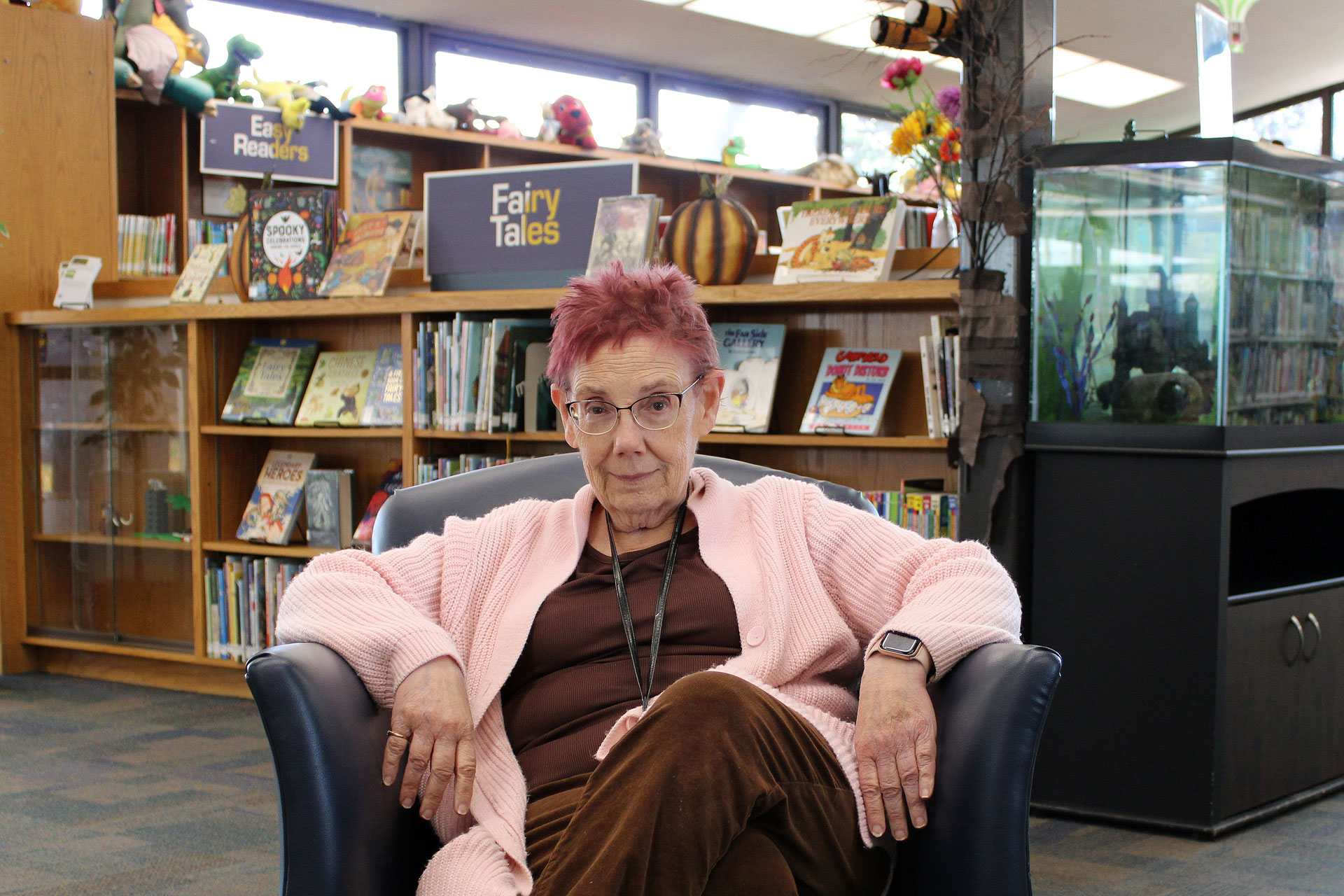
Wanda Mae Huffaker, a public service librarian at Ruth Vine Tyler Library in Midvale, shared her thoughts about how books that depict abuse can help children who are going through similar situations. While the material may be sexual, violent, or sensitive, she said that does not mean those topics are not realities for some children. A book might help them feel less alone, realize what’s happening to them and encourage them to seek help.
“Parents can protect their children if they want to … but what I think is very selfish of them is to cut off the resources for every other child …” Huffaker said. “Do not selfishly keep that lifeline from another child.”
While books are less restricted in public libraries, some children might not have exposure to that resource. This was a reality for Huffaker growing up.
“I couldn’t go to the [public] library when I was a child … because it was too far away to walk,” she said. “My mom had one car, [and] I was the oldest of a lot of kids.”
Without access to a public library, Huffaker spent her summers reading and rereading the books in her house, waiting for the school year to begin. She said this is one reason book accessibility can be important in K-12 schools.
Another challenge in book censorship lies in determining what qualifies as too sensitive. What is considered “pornographic” or “sensitive” to one person may not to another, according to Scholes.
Julie Roberts, an SLCC English and children’s literature professor, weighed in on the topic.
“There is a possibility that you might have books that describe sexual incidents. The definition of pornography is a complicated subject,” Roberts said. “But I don’t think many of these books fit the definition … I am sympathetic to the concerns, but I think a lot of times we are missing some valuable context.”
Marginalized communities
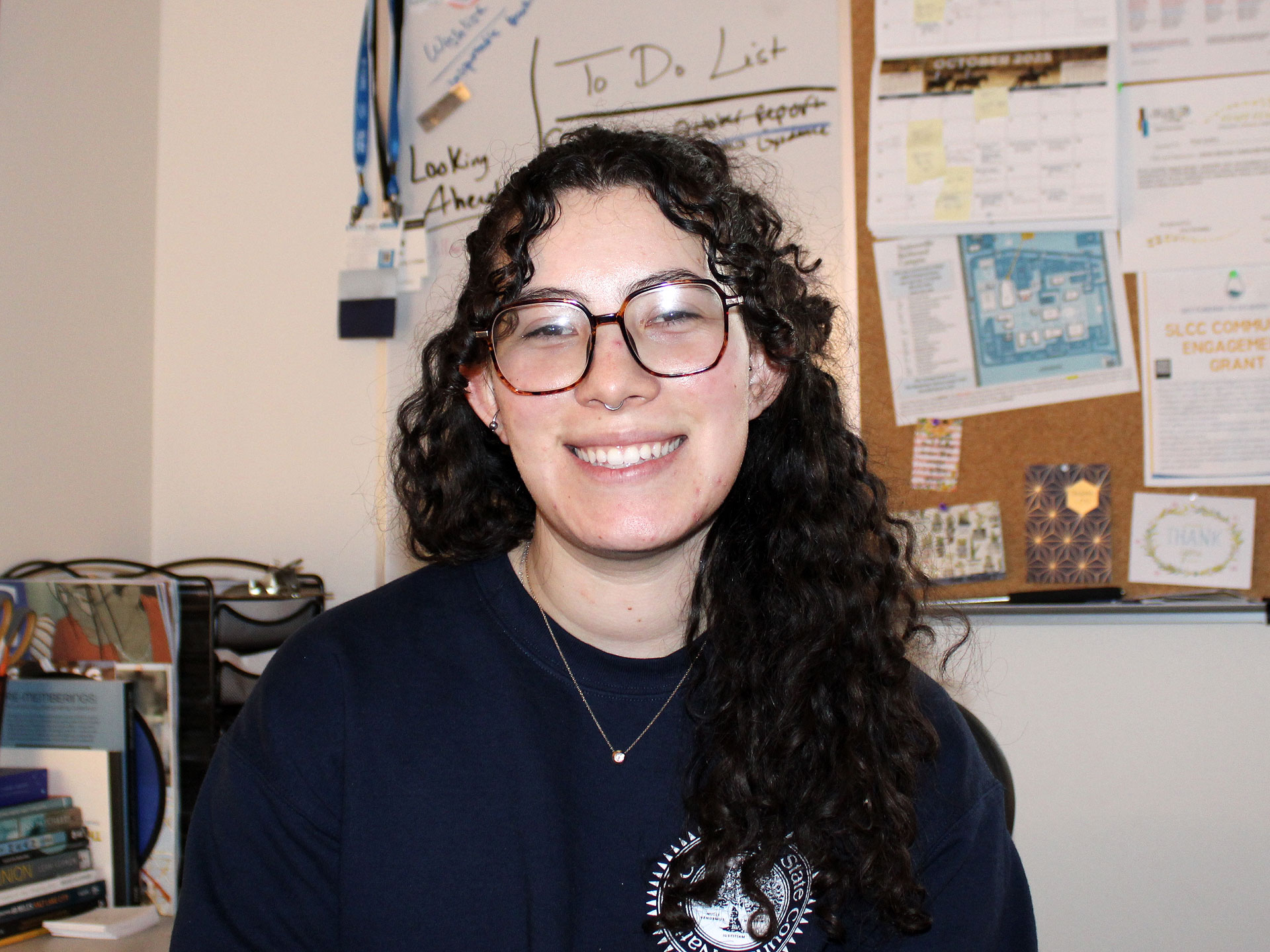
SLCC librarian Erica Gudiño expressed concern about book bans and how they might silence stories of marginalized communities.
“For decades, people have been saying that queer and trans folks are sexually explicit, that it is dangerous, or labeling certain types of stories as ‘pornographic,’” Gudiño said. “When really, they’re just depicting the realities of relationships and love and life that happen naturally.”
According to Roberts, sharing people’s stories can offer an avenue for children to feel represented in ways they might not be in their own lives and help them learn and gain empathy through reading about a diverse range of experiences.
Roberts also expressed concerns that some book bans are not led by a single concerned parent but by political activist groups with their own agendas.
“[Such political activist groups] are not necessarily reading the book but may do a search for terms in the book,” she said. “It’s a very heavy-handed approach.”
Scholes said parents have a right to express concerns about a book but should read it and decide for themselves why it is inappropriate. After that, she said, it should move through a review process so the school can decide if it is appropriate and relevant to the curriculum.
“If I were to ban a book, I would want to read it cover to cover,” Barrus said. “I would want to think about it and understand the implications of it.”
Scholes said the desire to ban books often stems from insecurity and a need for control.
“It doesn’t do what people want …” she said. “What it does is say, ‘I’m insecure in this area, I don’t want to have to deal with it, so I’ll hide it,’ but there’s very little we can hide.”
In Why Books are Banned, Roberts writes that banning books often makes them more popular, not less.
“Bans can generate more interest in and exposure to literary work, especially if it has received media attention,” she wrote.
SLCC student, Matthew Schoonover, majoring in kinesiology, expressed a similar sentiment.
“The restriction makes [books] more enticing,” Schoonover said. “You want to see why it was banned and if there is a controversy around it.”
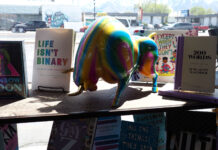
Banned Books Week ran Oct. 5-11. Gudiño put up displays at the Taylorsville Redwood Campus featuring banned books wrapped in paper. A synopsis was written on the cover along with the reasons it got challenged.
“Folks are able to kind of check it out and see, ‘is this book really that scary to begin with? Is it so dangerous that it can’t even be on the shelf?’” Gudiño said.
While censorship does not directly impact SLCC libraries, Gudiño tries to collect as many banned books as she can so that students have the option to read books that may have been banned in their K-12 education.